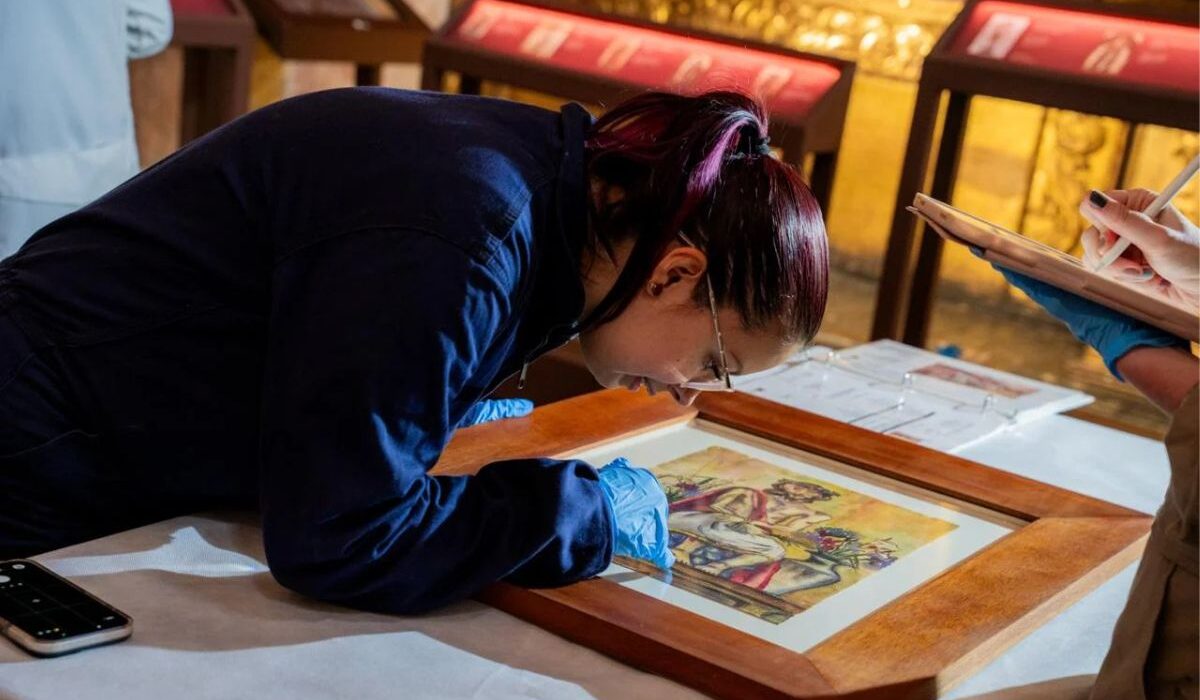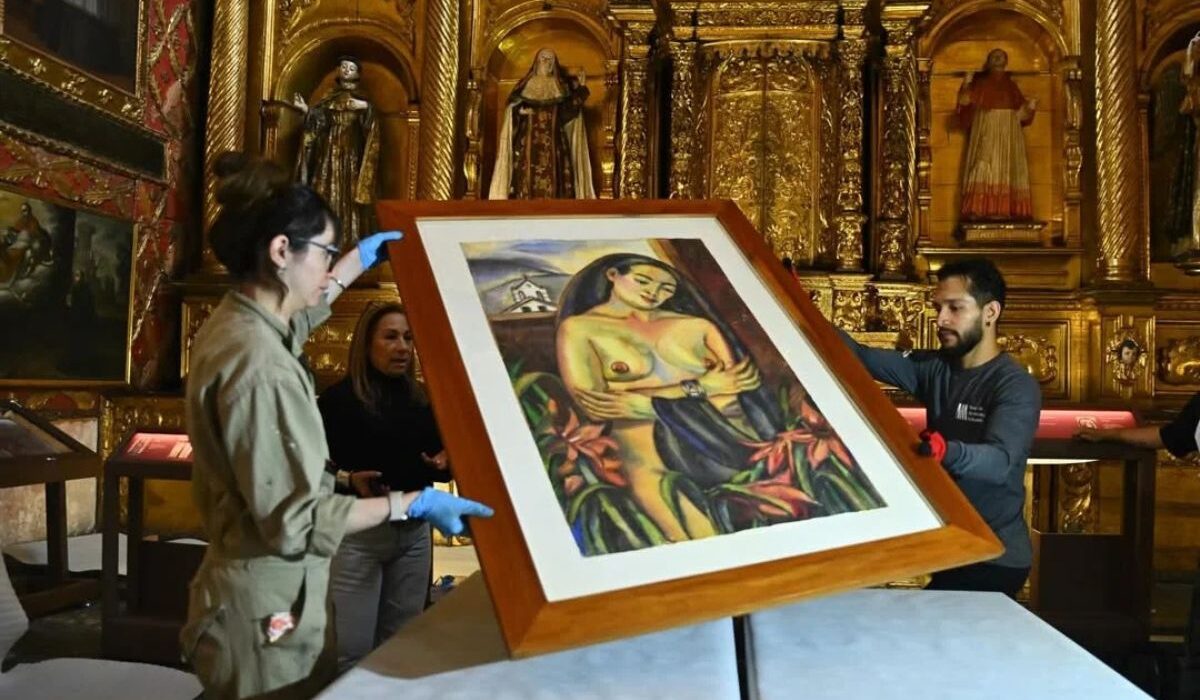
18 works by Débora Arango arrive in Bogotá for the exhibition La huida del convento
The Museo de Arte Moderno de Medellín, in partnership with the Ministerio de las Culturas, las Artes y los Saberes and the Museo Santa Clara, announces the opening of the exhibition La huida del convento, a tribute to Débora Arango, during the commemoration of 20 years since her passing on Thursday, December 4.
Maestra Débora Arango (Envigado, 1907–2005) defied a context deeply marked by moral and social conservatism. Through her work, she denounced the patriarchal and ecclesiastical structures that limited individual freedom, especially that of women. Her painting was, more than an aesthetic gesture, an act of courage that exposed the moral contradictions and hypocrisy of her time.
That her work is exhibited between December 4, 2025, and March 1, 2026 at the Museo Santa Clara—a space that for centuries housed the religious enclosure of women—carries profound symbolism. That precinct, a setting of seclusion, devotion, and control, now opens its walls to the critical and creative freedom represented by Arango.
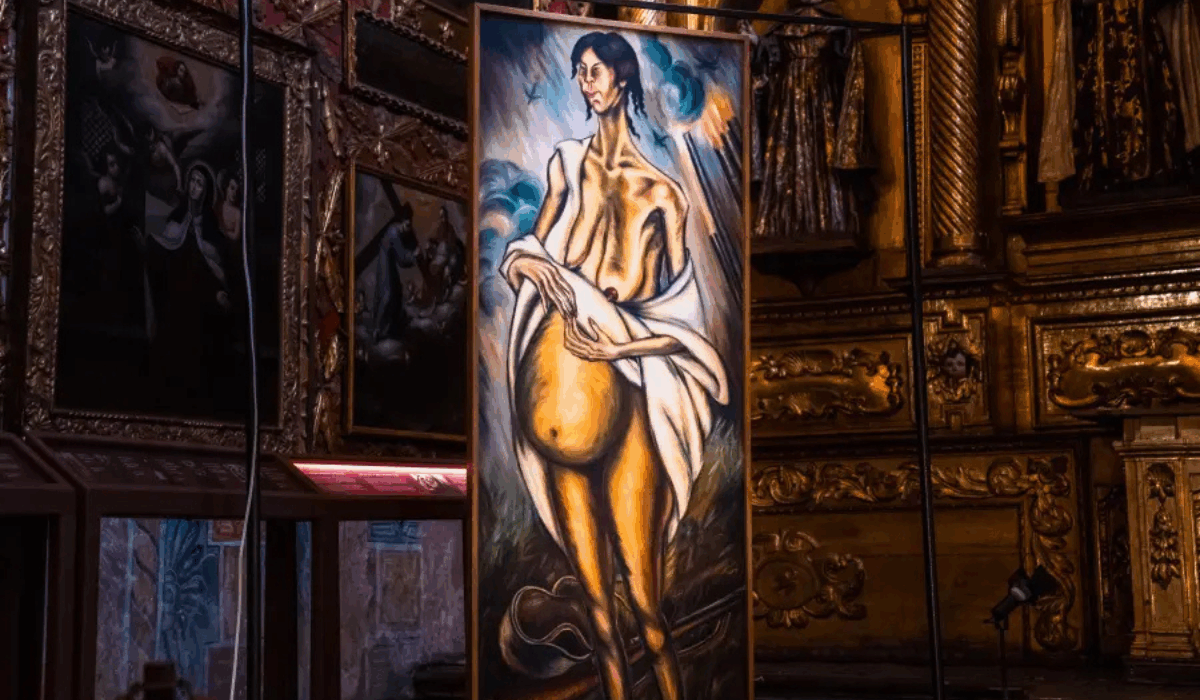
The exhibition brings together eighteen works from the MAMM Collection, organized in four thematic clusters that allow for a broad and reflective reading of her legacy:
- Her relationship with religious education and convent life.
- Her reinterpretations of the Catholic imaginary.
- Her critique of the Church as an institution.
- Her view on family, social inequality, and non-idealized maternities.
These pieces dialogue with colonial works from the Museo Santa Clara, creating a counterpoint between traditional Baroque art and Arango’s disruptive gaze. The exhibition title takes its name from one of her most emblematic watercolors, in which a naked woman leaves the cloister: a symbolic gesture of escape, liberation, and rejection of the oppressive structures that marked the lives of so many women.
La huida del convento is an act of memory, resistance, and recognition. Through the work of Débora Arango, the exhibition invites us to rethink the history of Colombian art, the structures of power, and the silenced voices—especially those of women. At the same time, it celebrates the courage of an artist whose brushstrokes continue to resonate with force today.
We invite everyone to visit the exhibition, participate in the pedagogical and cultural activities that accompany it, and join this tribute that transcends the aesthetic to become a space for dialogue and transformation.