

Talk-workshop La buena vida in other rhythms
INSCRIPCIONES CERRADAS
Date: Friday, March 15, 2024
Time: 4:30 to 6:30 p.m.
Format: In-person
Location: Study Room
Free admission with prior registration
Registration closed
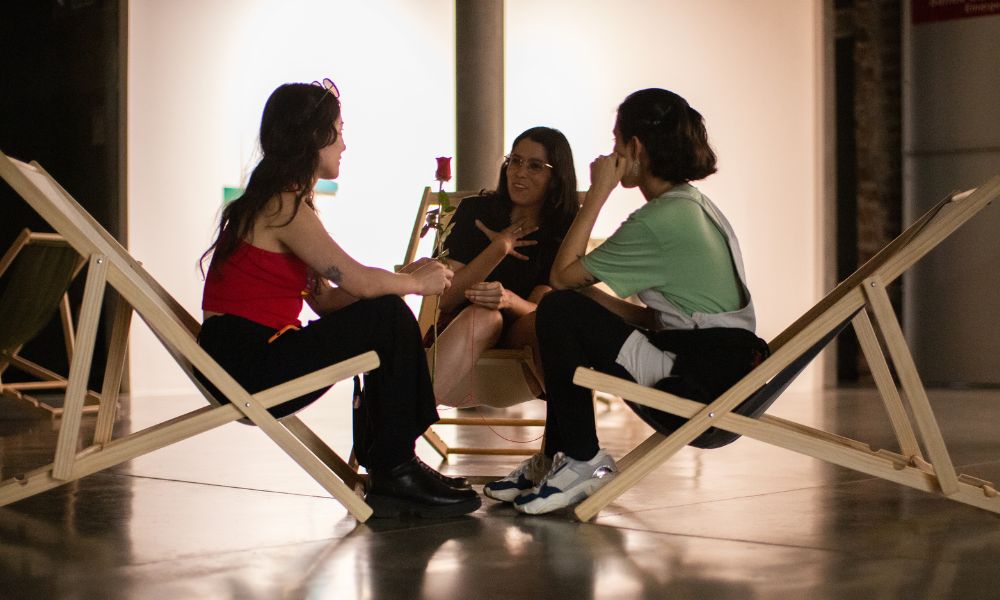
If you are interested in finding a balance between the frenetic pace of urban life and serene contemplation, we invite you to join this talk-workshop on Friday, March 15 starting at 4:30 p.m. so we can meet in our Study Room with some professors and researchers from UPB to discuss what la buena vida means and the rhythms with which life is lived.
La buena vida at other rhythms is nothing more than that, a good life at a different pace. In a world of immediacy, hyperinformation, exacerbated positivism, image as social representation, and unbridled consumption, each person’s body and mind must pause and ask: is this the life I want to live? Are there other possibilities?
The emancipation of life’s rhythm depends on each person in relation to their context; on the landscape, tastes, daily work, and being. One should not live at the pace imposed by the media, but rather at the pace that each action merits. That is to say, there is not a specific rhythm for each thing, but rather there is a condition inherent in each thing that suggests a rhythm. Being in front of the sea generates a different rhythm than being in front of a crowd or at the metro door; having a coffee with someone you love does not move at the same speed as having a coffee at your work desk; writing an academic or work text does not generate the same pauses as writing a poem or a letter to a loved one.
La Citta Lente, the praise of slowness, and other proposals about the rhythm of life – like this talk-workshop – aim to reveal a different way of inhabiting space and relating to others in the interest of caring for oneself and for others.
About the guests
Ana Elena Builes Velez: She is a professor-researcher in the areas of literature, landscape, identity, sustainability, and climate change. She has a special interest in identifying and recognizing the different ways in which the cultures of our country, particularly the Caribbean, address the issues that emerge from the relationship between subject and territory, landscape, and natural resources, from both a scientific and literary perspective. She has numerous academic and literary publications at the national and international level.
Juan Diego Martinez Marin: He is a professor-researcher in the areas of education, languages, educational assessment, and sustainability. He has a particular interest in recognizing the forms in which discourse is presented and its implications for different subjects. In addition, he is interested in learning about the role of literature in different settings that could favor a departure from market impositions. He has numerous academic and literary publications at the national and international level.
Danny Jean Paul Mejia Holguin: He is a professor-researcher in the areas of literature, education, languages, and creative writing. His academic and literary focus is centered on Colombian literature, on the implications it has as a resource for social, cultural, political, and gender identification and characterization to propose transformations aimed at improving the particular and collective conditions of others. He is the coordinator of the literature research seedbed at UPB called “Aquenarre.” He has numerous academic and literary publications at the national and international level.
Faber Andres Piedrahita Lara: He is a professor-researcher in the areas of literature, education, and philosophy. His academic and literary interest is centered not only on universal and Colombian literature but also on how it represents ethics, compassion, and relationships with others for a better life. In addition, he is interested in learning and teaching how literature can be a social device for understanding the world and relating to it. He has numerous academic and literary publications at the national and international level.
This activity is held in partnership with the Universidad Pontificia Bolivariana