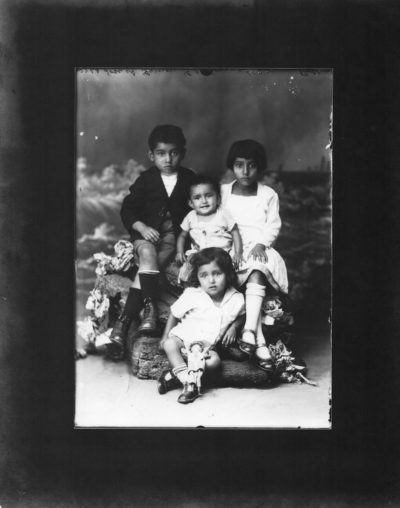
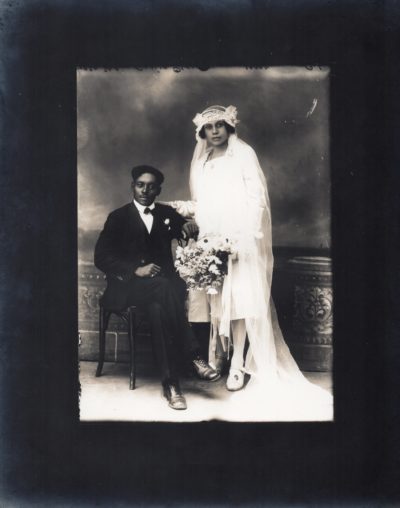
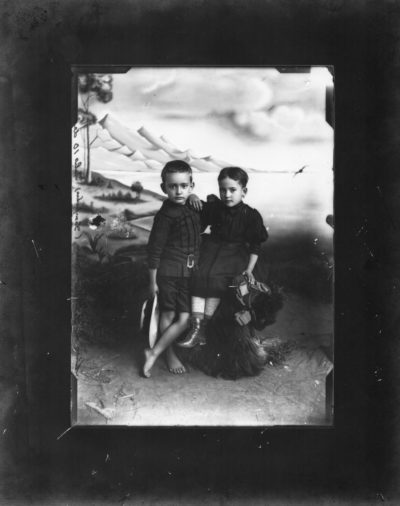
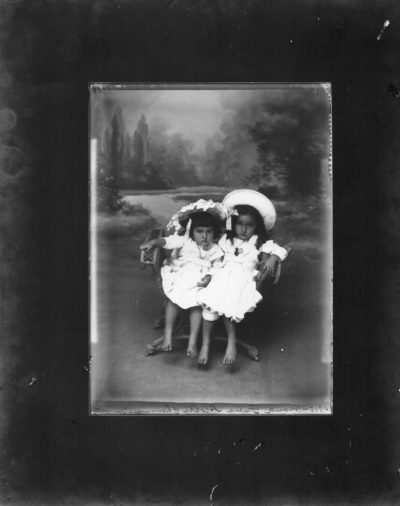
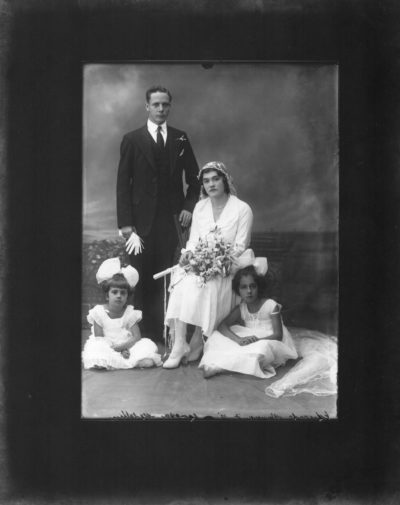
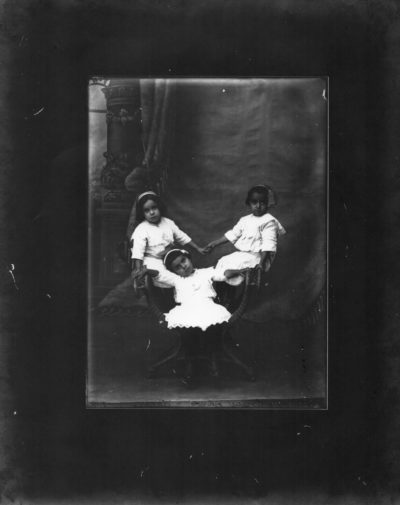
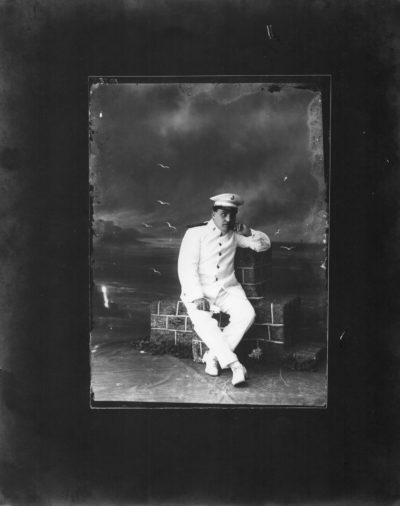
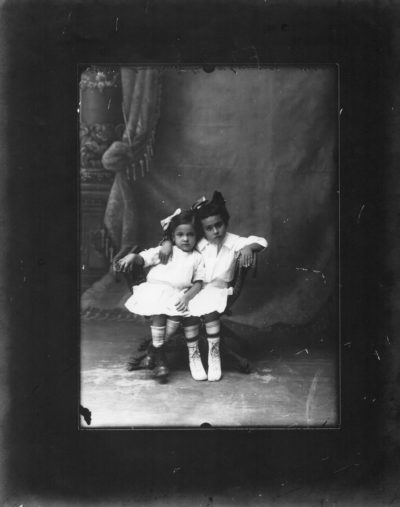
Throughout nearly four decades of his career, Benjamín de la Calle portrayed a large number of families, making them one of the recurring themes of his vast production. In most of these photographs, the presence of the father predominates, and even the file labeling was done under his name, which shows how Antioqueño society was structured, where the father occupied the top of the family hierarchy. However, in De la Calle’s archive, as in life, there are some cases that break this generality. Although mostly traditional, De la Calle went on to portrait families composed of widowed or separated mothers or fathers and their children, grandparents and grandchildren, aunts and nephews, couples without children, etc. In these images stands out a compositional intention, in which clothing and ornamentation reveal the social condition of the family. Such is the case of Leocadio Upegui and Family (1914) or Mariano Hernández and his wife (1916), where floral arrangements can be observed at the feet of those portrayed, given the lack of footwear befitting the occasion. In other cases, the symbolic wink is given by composition and clothing, as in the case of Gabriel Tamayo R. and Family (1919), in which a descending triangle formed by the white suits of the three children, are joined to the symmetrical position of father and mother, thus configuring a kind of heart.
The MAMM Digital Collection is a work in progress. If you have additional information or have identified any errors, please contact us at [email protected].
If you would like to explore the contents of our collection further or access supplementary documentation, you can contact us at [email protected].