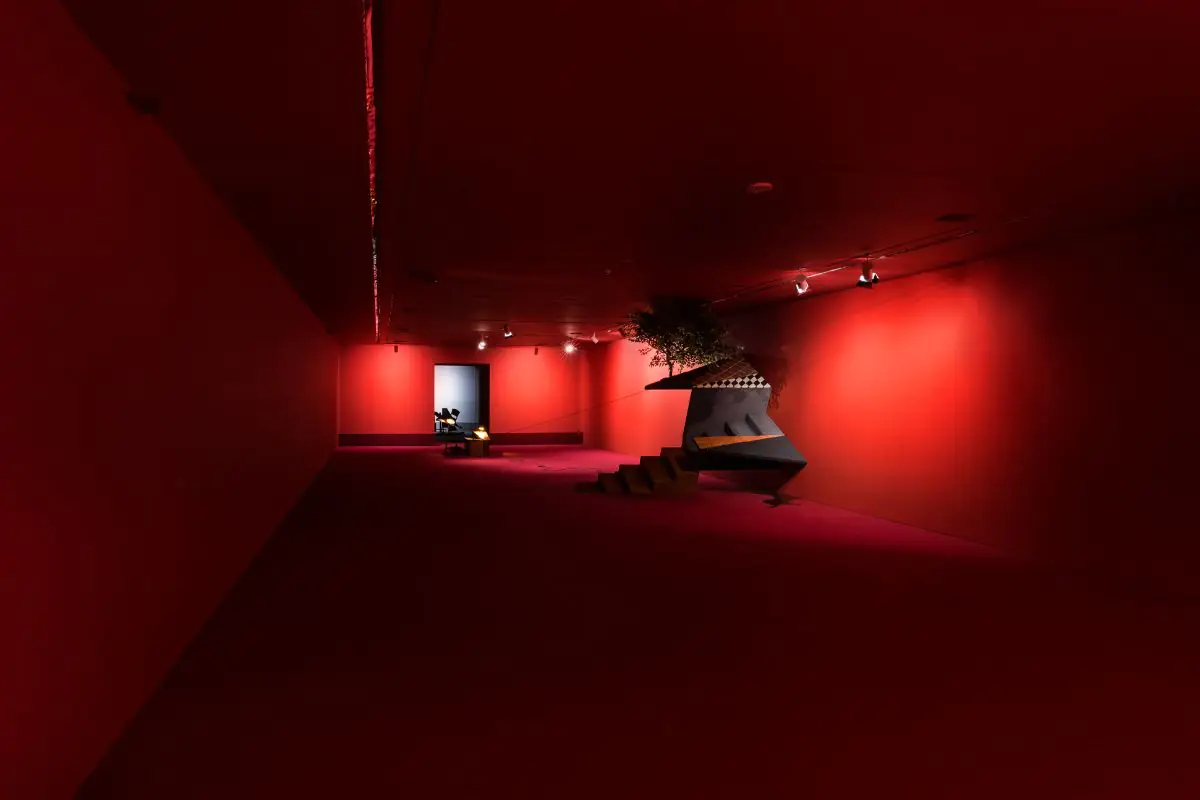
 Galleries B, C, Main Nave
 From 10 of September 2026 to 28 of March of 2027
Artista: Pedro Gómez-Egaña
Our relationship with the underground is shaped by four impulses: to extract, to safeguard, to eliminate, and to transmute. Far from being inert, the depths constitute a complex domain in which matter and energy coexist. The way we relate to their minerals, dynamics, and beings raises questions about progress, technology, and the place of humans within them: the violence of extraction; the safeguarding of what is irreplaceable; what is discarded—from bodies to waste—and the role that fantasies of the underworld and the mysticism of the Earth play in our culture.
In The Years of the Stone, Colombian artist Pedro Gómez-Egaña (Bucaramanga, 1976; based in Oslo, Norway) delves into the subsoil by reflecting on mining, its sensations, and its symbolism. The project unfolds through a major sculptural intervention that goes beyond the classic representation of a mine shaft in order to define the depths as territory where time and space overlap. The notions of up and down merge: the
inextricable link between what lies underground and what exists on the surface is revealed through the network of effort embodied in materials—the dining table, Grandma’s plate, the tree in the yard, or the ground we walk on.
The process behind this exhibition began when a miner gave the artist a single piece of coal while visiting a coal mine in the municipality of Amagá, Antioquia. This simple gesture set off a series of reflections on the experiences and sensations that we associate with mining: the contrast between industrial volumes and discreet, safeguarded treasures; the importance of sound in everything that pertains to the underground; the presence and sacrifice of animals in extractive labor; and the way various legends, literature, and music address the complexity that arises from constantly intervening in a landscape that includes us.
The result is a dreamlike scenography, tinged with sounds, movements, and a red pigment—itself the outcome of coal and iron combining—that evokes geological realms and the sacrifice of miners and animals. The dreamscape in The Years of the Stone could be seen as the dream of an eight-legged mule—a blend of the symbol of the muleteer tradition and Sleipnir, the horse of the Norse underworld—a witness to precious and lethal exchanges. Amid its dream, the mule navigates territories that unfold across different planes and in temporal cycles evoking days, years, or centuries. At the end of this rarefied wandering, everything conspires so that a miracle may occur: a small piece of coal opens and closes with the imperceptible slowness of a dawn.
Partnerships


Institutional Partnerships



Support provided by