

Course: Tools for creating an art exhibition
Dates: Tuesday, June 4 to Friday, June 7, 2024
Time:
Tuesday, June 4, 5:00 to 8:30 p.m.
Wednesday 5, Thursday 6 and Friday 7 of June. 5:00 to 7:30 p.m.
Format: In-person
Instructors: MAMM Curatorial Team
Fee
Early bird: $340,000 COP (until Saturday, May 25)
MAMM Friends: $302,000 COP
General: $378,000 COP
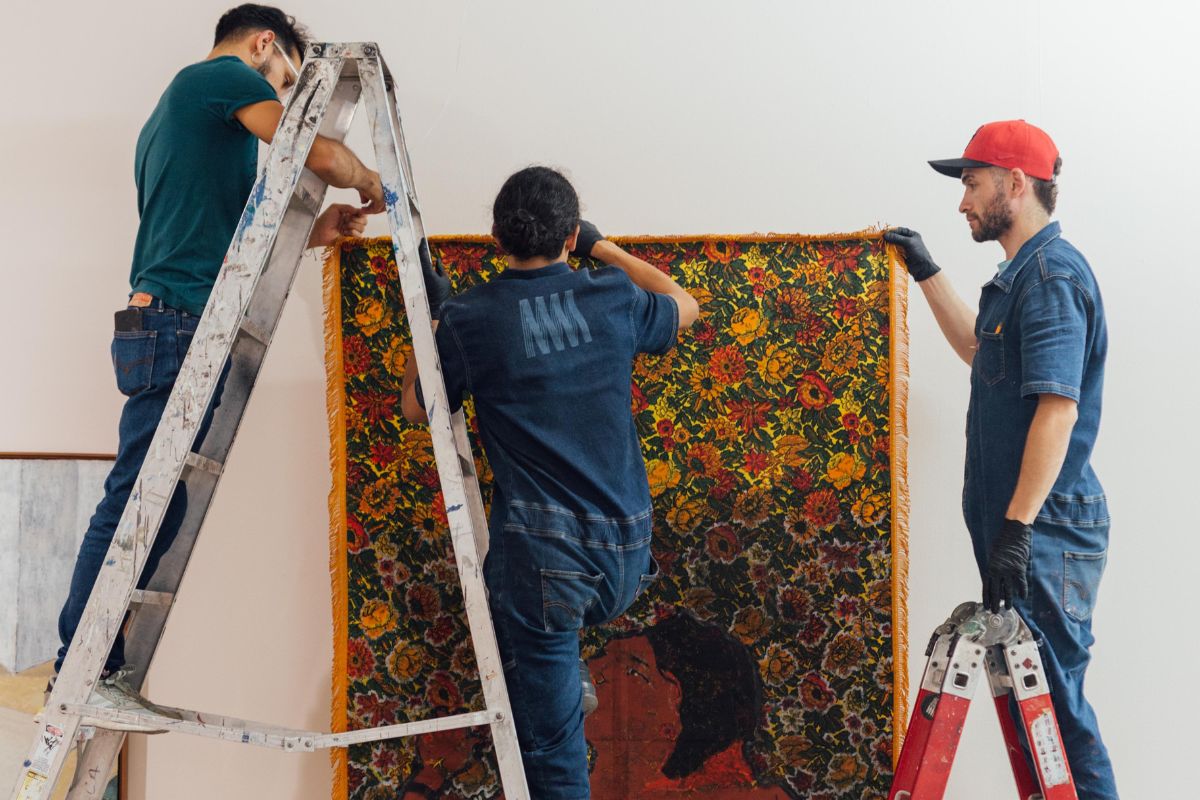
This immersion course offers a general overview of the art ecosystem, the design, and the production of art exhibitions, providing tools that can be applied to independent spaces as well as galleries, art centers, and other types of museums.
If you are receiving training in curatorship, are part of artistic collectives, are a gallerist, installer, or collector and are interested in learning about the development of art exhibitions to apply in your own work, you can participate in this course in which we will share the experience the Museum has gathered over 46 years.
In the 4 sessions of the course, we will take a thematic and practical journey that includes curatorial research processes, the planning, production, and installation of exhibitions, as well as strategies for the transportation and preventive conservation of works of art. The course sessions will be led by Museum professionals responsible for these processes within the institution.
Learn about the course sessions
Led by Emiliano Valdés
The art world is a complex and interconnected network where diverse actors play specific roles in the creation, circulation and appropriation of art. Understanding exhibitions as one of the points of convergence and interaction among these actors offers us a useful panorama for recognizing roles, spaces and scopes within the course.
Led by Ana Ruiz
An exhibition requires posing a problem, outlining an idea or proposing a hypothesis around a theme or an artist, keeping in mind the context, elements, objectives and audience to design and produce a discourse coherent with these circumstances.
This session will outline the necessary process for creating an art exhibition in different contexts, from the initial idea, research, thesis or proposal development and curatorial approach, through to the start of the production phase.
Led by Cristina Vasco
How do you transform curatorial research into an exhibition? In this session, we will discuss the pre-production phases of an exhibition, the fundamental documents and processes for planning such as the museographic script, loan management and insurance policies, packaging, transportation, conservation reports, timelines and budgets.
Led by Cristina Vasco
Drawing on case studies, we will review in a general manner the different stages and activities related to the production and installation of an exhibition, and how every detail is conceived and executed to enhance the curatorial and artistic discourses.
Data, examples and tips will be provided for bringing an exhibition idea to reality: types of installations required according to the works to be exhibited, the development of floor plans, the preparation of galleries, walls and furniture, installation of audiovisual resources, different supports and lighting devices, through to signage in the exhibition.
Led by Dora Escobar and Andrés Roldán
In this session, participants will learn in a practical way about custody protocols, the registration and intake of artworks, the basic materials necessary for the conservation of pieces starting from handling and transport, through to packaging materials and tools. Additionally, the terms of a conservation report and the procedures for cleaning and preventing deterioration of a work will be studied in a general manner through examples. At this stage, participants will learn about the international recommendations that govern the conservation of works of art, related to the regulation of temperature, humidity, cleanliness, exhibition and rest periods.
Meet the facilitators
Emiliano Valdes
Chief Curator MAMM
He holds a degree in Architectural Sciences from the University Institute of Architecture of Venice and a postgraduate degree in Art History and Hispanic Literature (Dukes of Soria Foundation and Ministry of Culture, Madrid, Spain). Until 2015, he was associate curator of the 10th Gwangju Biennale (South Korea) and co-director of Proyectos Ultravioleta, a space dedicated to artistic experimentation in Guatemala City. Previously, he was the curator and head of visual arts at the Centro Cultural de Espana in Guatemala, as well as a professor at the Universidad Francisco Marroquin in the Introduction to Curatorship course. He has worked in institutions such as DOCUMENTA(13) (Kassel), the Museo Nacional Centro de Arte Reina Sofia (Madrid), and Contemporary Magazines (London). Since 2015, he has been the chief curator of the MAMM, where he has organized solo exhibitions of Carlos Amorales, the Puerto Rican duo Allora & Calzadilla, Maria Isabel Rueda, among others, as well as group exhibitions such as Pasado tiempo futuro. Arte en Colombia en el siglo XXI, the first panoramic exhibition of Colombian art produced in the 21st century in an institution.
Ana Ruiz Valencia
Junior Curator MAMM
Curator, musician, and researcher based in Medellin since 2020, interested in contemporary and experimental artistic practices, particularly those related to aural culture and the philosophy/politics of sound. As a curator, she carried out the projects Espacios de interferencia and Todo es radio as part of the curatorial team of the 45th Salon Nacional de Artistas, and more recently the exhibition Cimarron by Charles Freger at the Museo de Arte Contemporaneo de Queretaro. She is co-author of the book Charles Freger – Cimarron: Freedom and Masquerade (Thames and Hudson, 2019), and her artistic and research work has appeared in Radical Sounds Latin America (Germany), Festival Tsonami and Revista Aural (Chile), IN/OUT Festival – ProHelvetia (Switzerland/Colombia), Universidad de Guadalajara (Mexico), Festival Spectra – Universidad de los Andes (Colombia), Actas de Diseno (Argentina), ContemporaryAnd Latin America, among others. She was guest curator of the Auditum Sound Art Festival 2021-2022 and curator of the University Museum of the Universidad de Antioquia between 2020 and 2022. She is currently Junior Curator of the Museo de Arte Moderno de Medellin.
Cristina Vasco
Junior Curator MAMM
She holds a degree in Visual Arts, a Master’s in Socio-Spatial Studies, and a specialization in Collective Memories, Human Rights, and Resistances from CLACSO Latin American Council of Social Sciences. She was academic and research coordinator at the Medellin Visual Arts Network and general coordinator of the creative laboratory Caminos Culinarios for the Ministry of Culture. At the MAMM, she has been in charge of the production of Programa C exhibitions, a space dedicated to emerging artists at the national level; Revisiones, an exhibition segment for mid-career artists; and the Homenajes MAMM exhibition program for established artists. She has been in charge of individual temporary exhibitions and national and international group shows such as: II Coloquio latinoamericano de arte no-objetual y arte rural; La vuelta; Pasado, tiempo, futuro. Arte en Colombia en el siglo XXI; El circulo que faltaba; Maria Teresa Hincapie. Si este fuera un principio de infinito, among others. She has been part of the curatorial process for El Camino mas largo; John Mario Ortiz. Medir el espacio, modelar el territorio and Version libre. Sucesos en la coleccion MAMM.
Dora Escobar
Collection and Registry Coordinator MAMM
She began her work at the MAMM in 1984 coordinating the Sculpture Park at Cerro Nutibara. Since 1992, she has been in charge of the Museum’s collection management. Her experience at the MAMM has allowed her to lead the professionalization and updating of the processes associated with collection management: registration, cataloging, classification, preparation of legal documentation, and preventive conservation of the MAMM’s collection.
Andres Roldan
Administrative Leader, Curatorship MAMM
Conservator and Restorer of Movable Cultural Heritage in training at the Universidad Externado de Colombia. Cultural Producer and Coordinator of museographic processes for contemporary artworks.
With a 14-year track record, he applies his experience in preventive conservation, planning, and execution of diverse visual arts and performative projects with ephemeral and site specific formats, in cultural and museographic institutions and artist studios. He acquires his knowledge through the different professional roles he has held in the Operations and Curatorship areas of the Museo de Arte Moderno de Medellin, Museo de Antioquia, Museo del Oro, and as an independent advisor to private collections.
He currently serves as Administrative Leader of the MAMM’s Curatorship area, centering his work on the administration, coordination, and monitoring of contractual processes for national and international exhibition projects, supporting the registry and collections area with the administration of the holdings and the implementation of conservation strategies across the different materialities that constitute it.