

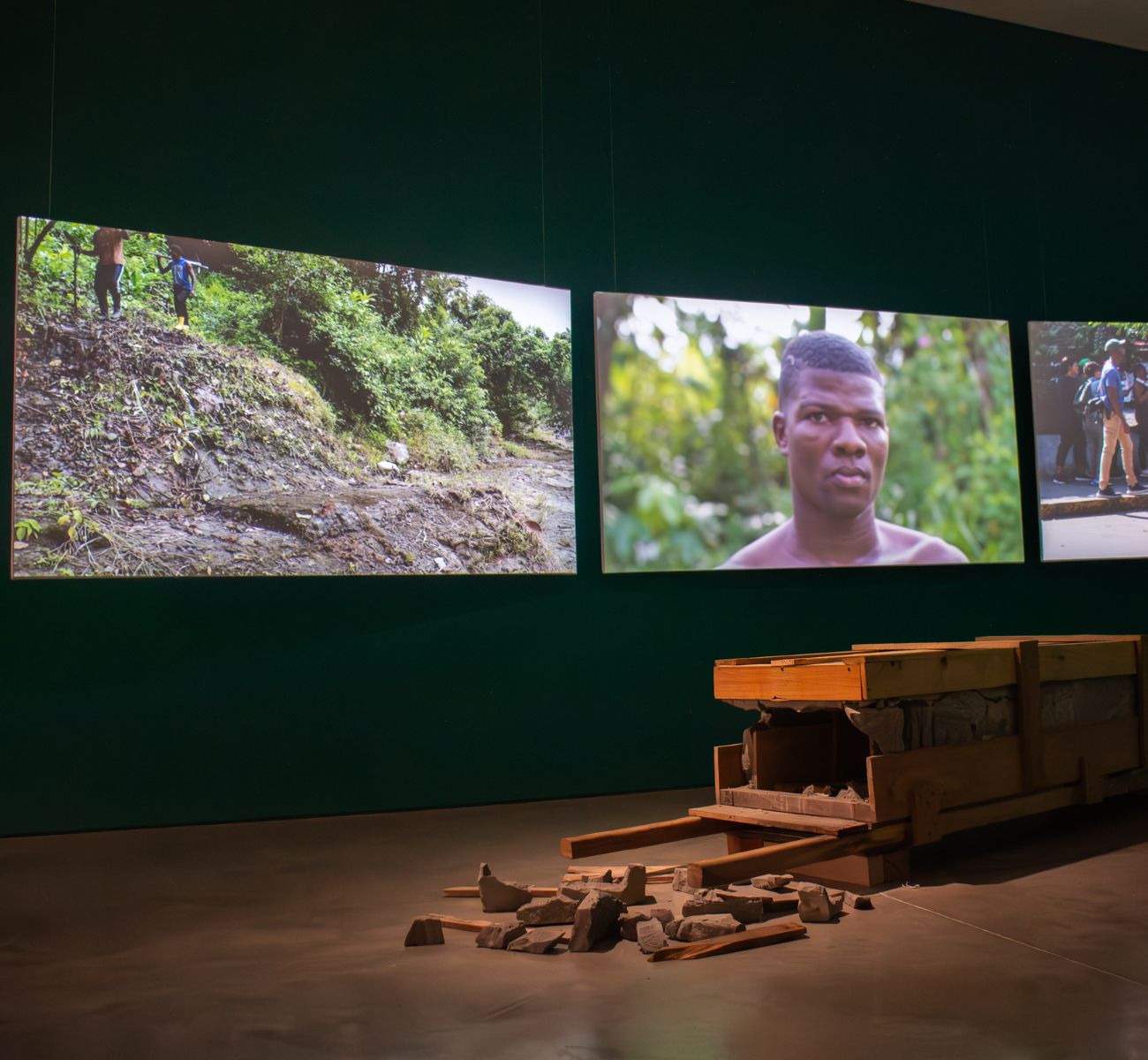
 From 26 de April 2024 al 01 de September del 2024
Participants: Liliana Angulo / Andrea Bonilla Ospina, Fany McGhan e Yndira Perea / Laura Campaz / Casa Futura y Riso Tura / Escuela Antiopresión, Pantera y Alicia Reyes Londoño / Eblin Grueso / Alexandra Idrobo / Las Jaibas / Yeison Riascos / Velia Vidal / Risseth Yangüez Singh
Crossing the sun is a horizon of the impossible—who questions the impossible? And for what reason? The day Carlos Angulo, with absolute determination, responded to the police procedure that harassed him that morning in Bogotá on his way to work, that day he allegorically crossed the sun, and with it affirmed for his people and for all of society a way of restoring dignity. His action, recorded on video by a passerby, is the result of a lifetime understanding how to respond to a system that constantly provokes through the aggression of racial profiling, as was the case here. By responding and resisting, he defied an established order, elucidating that every moment demands actions and thinking that reveal the way oppressions operate.
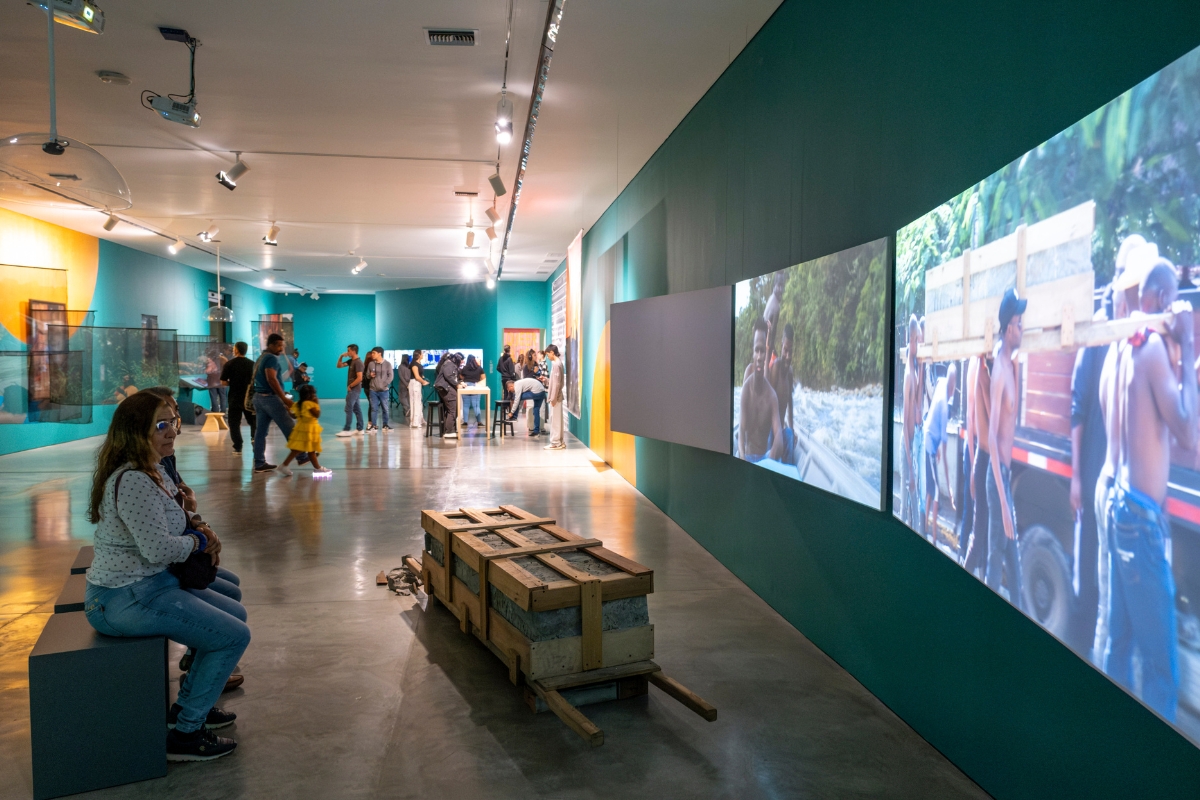
All the works in this exhibition trace their own paths of sovereignty, from bodies of pleasure, spirituality, and struggle, or declared in a dissidence from gender and cisnormative behavior. They are in the key of the experiences and endeavors of primarily Afro and dark-skinned artists; we speak of dark-skinned understanding the declaration that prietitud implies, as does the song that bears the same name. The works respond to a geography that runs through Santa María de Timbiquí in Cauca, crosses through Buenaventura, Cali, Puerto Tejada, tracing routes from the Chocó coast reaching the Bay of Panama; a set of places that here we will call the greater Pacific, understanding that territorial denominations generate complexity—here we refer to a great diverse and contested territory from which the works presented emerge.
It is important to ask ourselves what it means to think from Antioquia and particularly from Medellín about relationships with what we call the greater Pacific. Perhaps it means recognizing the social and political complexity of what separates this city and its people from the Pacific, but even more it is an invitation to recognize what its own relationship as a city and region that holds economic and political power in the country is with its own Black Antioquian people, and what the ongoing historical debts are that are important to assume. Alluding to one of the works titled Traer el mar, this exhibition poetically brings seas and rivers to this city, creating mirrors of water in which to see our reflection.
Relive the experience
Major ally

Supported by

