

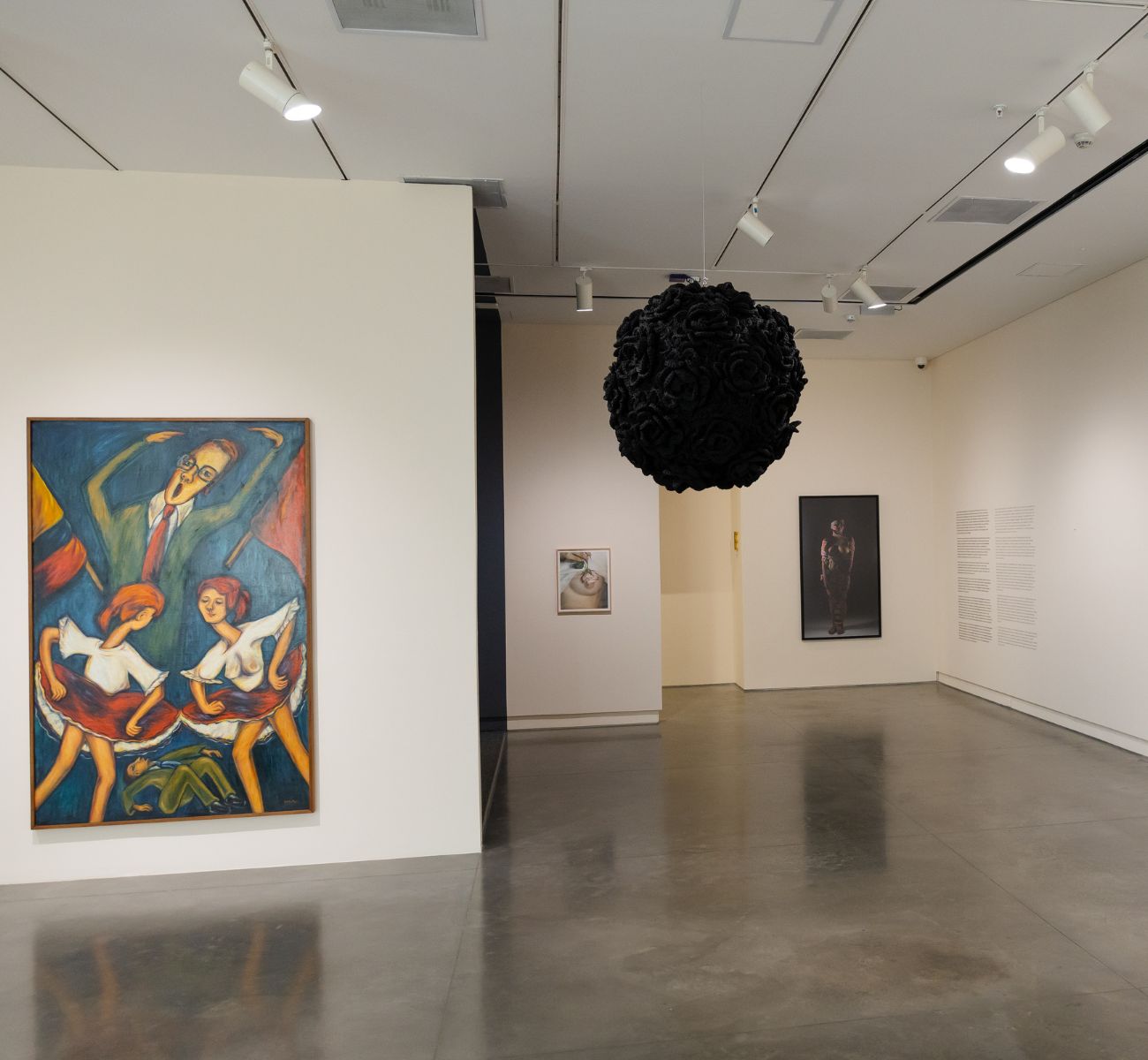
 From 31 of July 2024 to 20 of July of 2025
Participants: Débora Arango, Olga de Amaral, Minia Biabiany, Karen Paulina Biswell, Marilyn Boror Bor, Patricia Bravo, Trixie Briceño, Coqui Calderón, Johanna Calle, María Teresa Cano, Leonora Carrington, Luz Elena Castro, Donna Conlon and Jonathan Harker, Elba Damast, Giana De Dier, Olga Dondé, Clemencia Echeverri, Sandra Eleta, Helen Escobedo, Elyla, Leonor Fini, Laura Fong Prosper, Ethel Gilmour, Beatriz González, Judith Gutiérrez, Iraida Icaza, Teresa Icaza, Graciela Iturbide, María de la Paz Jaramillo, Karen Lamassonne, Abigail Lucien, Mónica Mayer, Yolanda Mejía de Bech, Margarita Monsalve, Julieth Morales, Isabel de Obaldía, Beatriz Olano, Natalia Ortega, Ana Patricia Palacios, Cecilia Paredes, Eugenia Pérez, Liliana Porter, Marta Lucía Ramírez, Helen Rousseau, Fanny Sanín, Andrea Santos, Olga Sinclair, Ela Spalding, Haydée Victoria Suescum, Amalia Tapia, Natalia Uribe, Marta Elena Vélez, Ana de Vicente, Adriana Vallarino de Lewis, Alicia Viteri, Risseth Yangüez
If the term muse generally refers to the female figure who used to bring inspiration to the (male) artist in a heteropatriarchal, and therefore masculine, conception of the world, the one used here, as we immerse ourselves in Biabiany’s universe, is one that draws on symbolic and visual possibilities to refer to the women of her family, their possibilities of healing, and the history of dispossession of Guadeloupe. Just as the fruit of the musa is used to treat the female reproductive organ, this exhibition aims to point to the social symptoms that have historically kept women away from spaces of creation, enunciation, and representation such as museum collections.
Musa. Perspectivas femeninas en las Colecciones del MAMM y MAC Panamá addresses the way women have recorded history, the way they have been represented, the attempts at self-determination and self-representation, as well as the way certain attitudes and methodologies associated with “the feminine” have determined ways of understanding and producing art.
At the same time, the exhibition seeks to overcome traditional, outdated notions around gender, as well as to challenge and resist the preponderance of binary logic, and even attend to other gender-diverse identities. Imagining the feminine as an energy that entails certain types of attitudes and actions aimed at fostering care, growth, dialogue, and collaboration rather than a particular aesthetic or theme, will always be a guiding principle.
The exhibition brings together works by more than sixty artists from multiple countries and is displayed across three exhibition halls. Grouped by conceptual and formal affinities, they generate dialogues between artists of different periods and geographies: in Hall E, works by artists form an amalgam of universes and feminine visions, interweaving from diverse positions and perspectives the identity specificities of being a woman. Hall F houses a series of works in which abstraction and formal experimentation articulate a space of spiritual inquiry where feminine subjectivity embraces the fantastic, the oneiric, or the magical. Hall G, in turn, gathers works that focus on political memory and social criticism from different historical moments in our territories.
This joint review of the collections of both institutions brings to the table the gender disparity that persists among the artists who compose them. Furthermore, the project allows for the consideration (and rethinking) of institutional work practices, acquisition policies, and the importance of the people who care for the holdings. The exhibition will be presented first at MAMM, between July 2024 and May 2025, and then at MAC, from July to December 2025, and will be accompanied by a series of public programs, talks, gatherings, commissions, and a publication.
Major ally


Supported by

This exhibition is part of one of the projects selected in the Cultura Latinoamérica call by SURA in alliance with Latimpacto.