 From 16 de March 2022 al 12 de June del 2022
Artists: Hugo Branco, Diana Combo, Gustavo Costa, Budhaditya Chattopadhyay, Lawrence English, Antye Greie-Ripatti, Matthew Herbert, Miguel Isaza, Kyoka, BJ Nielsen, Laura Romero, Natalia Valencia
The sudden lockdown and global silence experienced during the Covid-19 confinement presented an unexpected opportunity to capture previously imperceptible sounds and sharpen our listening to our surroundings.¹ The pandemic, as a disruption of the daily rhythm, opened our auditory perception to multiple fields. New Chronologies of Sound is precisely an investigation and exploration that questions how artists experienced time during the pandemic and lockdown through field recordings, combining sound art, acoustic ecology, and electronic composition.
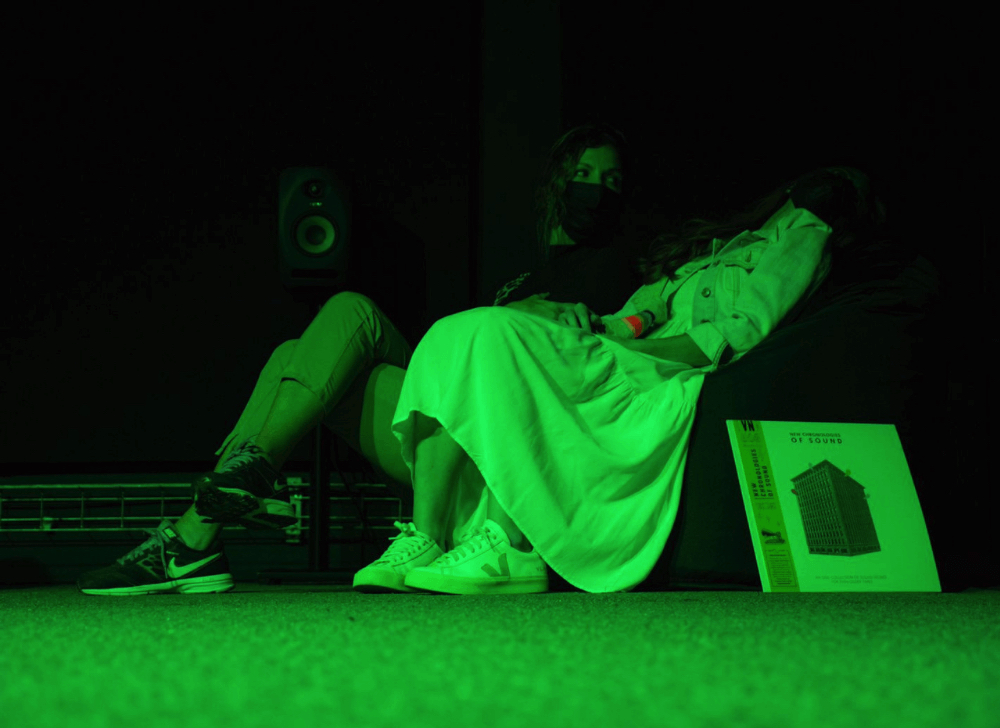
This project took shape through a sound compilation commissioned by the Municipality of Aveiro, Portugal, from the experimental music label VIC NIC. It includes a CD, a collection of written reflections, a free downloadable sound bank, and the exhibition currently on display at the MAMM. The participation of a group of artists from different countries and continents in the creation of these materials produces a diversity of ways of listening to the soundscape and to humanity, weaving together works intended for the active awareness of listening.
How does this new axis of perceived time affect our ways of listening? And how does it affect the ways in which we create? To what extent does it modify the ways in which we relate to the places we inhabit? Or how can sound art and acoustic ecology generate reflection on the anxieties and expectations introduced by such uncertainty? Likewise, what impact can this new perceived chronology have on artistic creation and performance? How are sound artists around the world responding to the emerging limitations and challenges? And what kind of solutions are emerging?
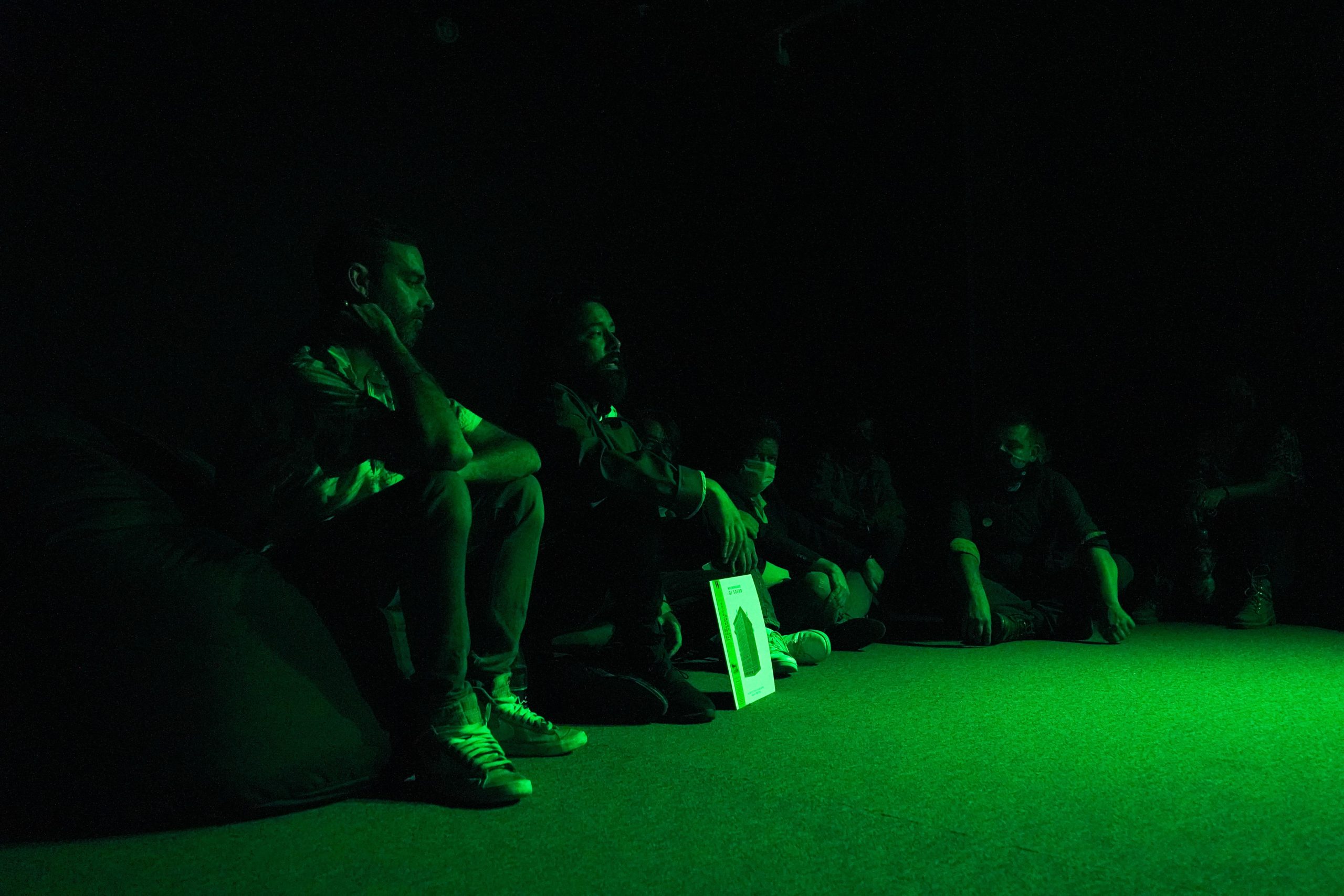
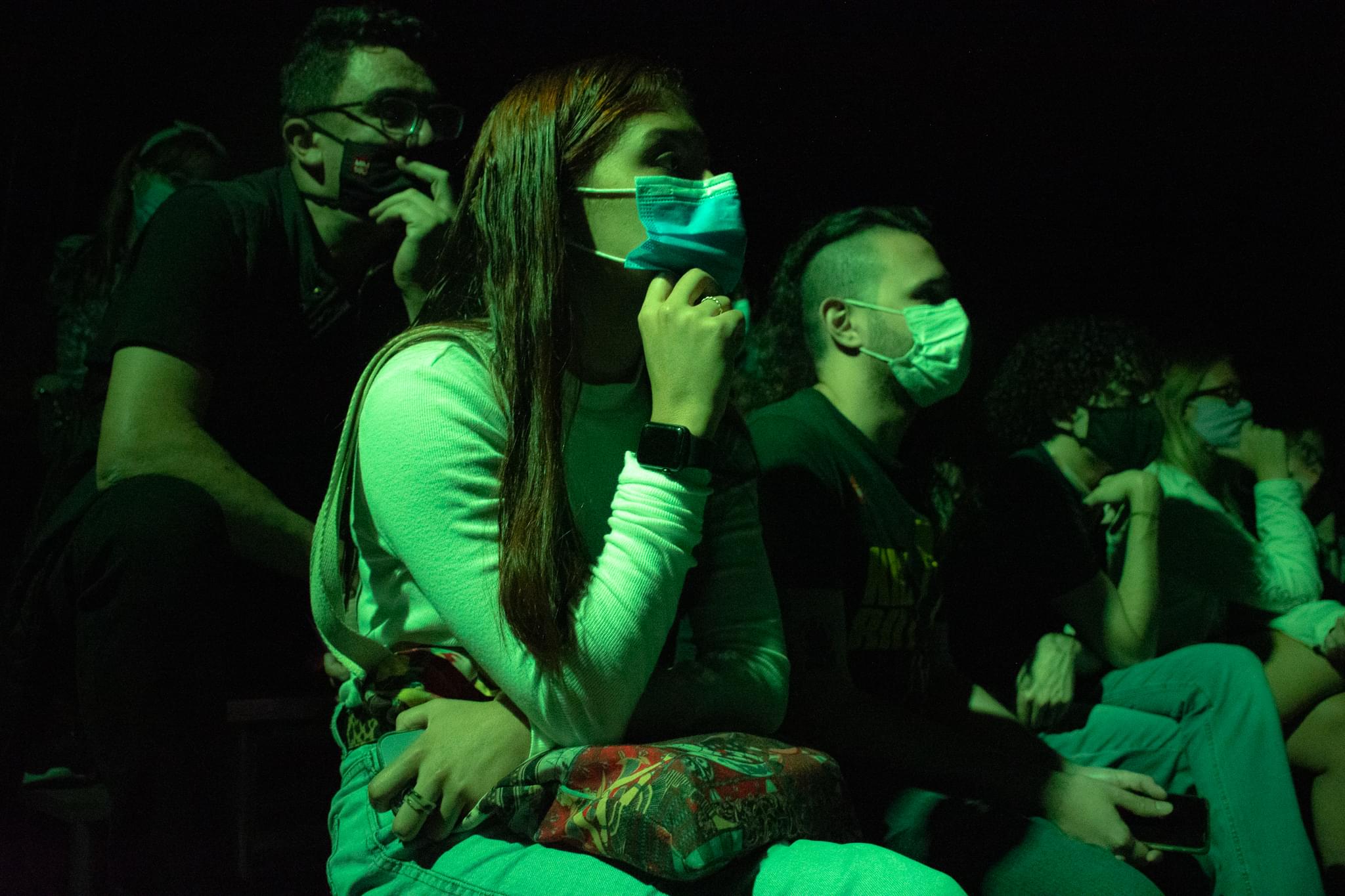
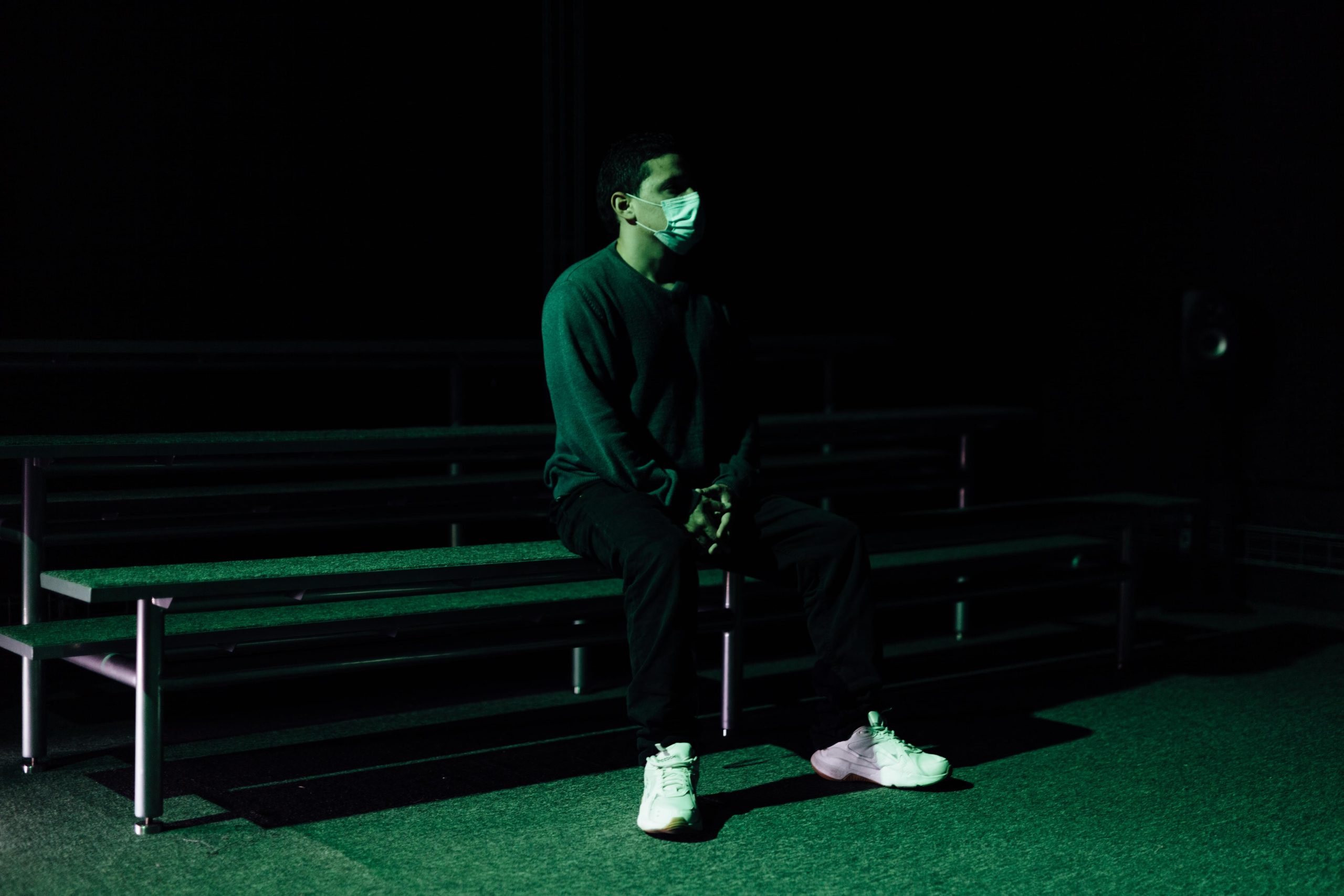
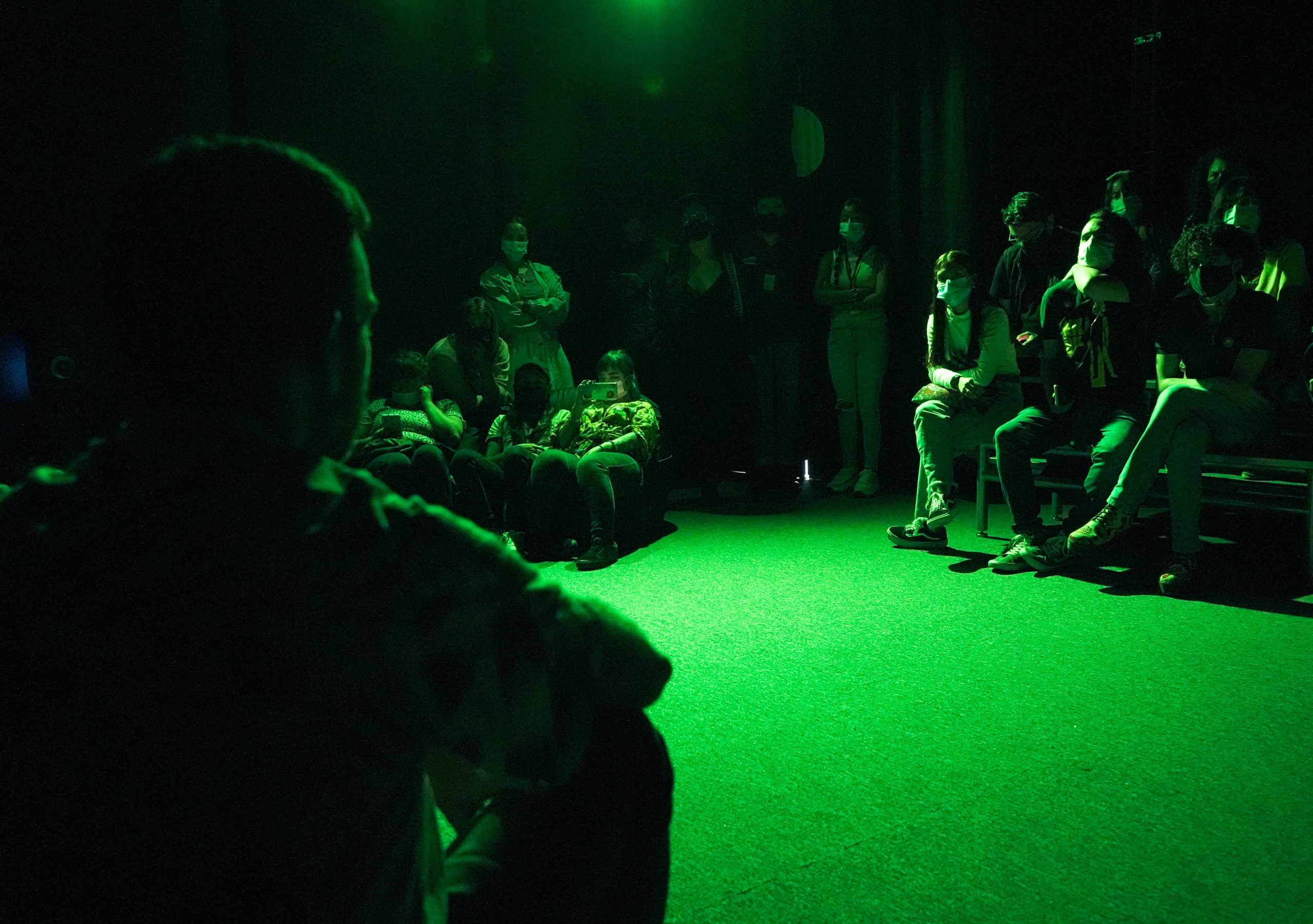
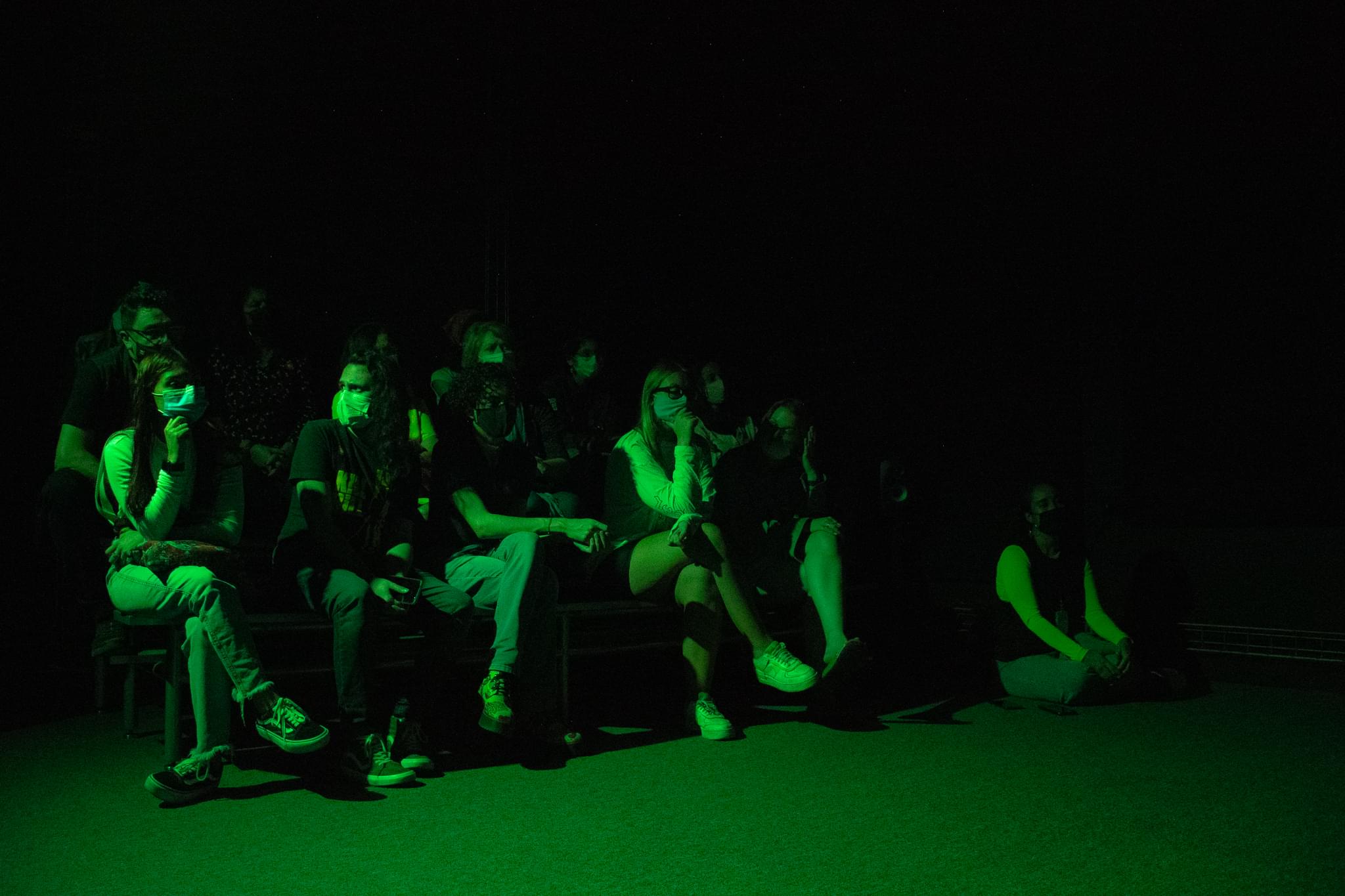
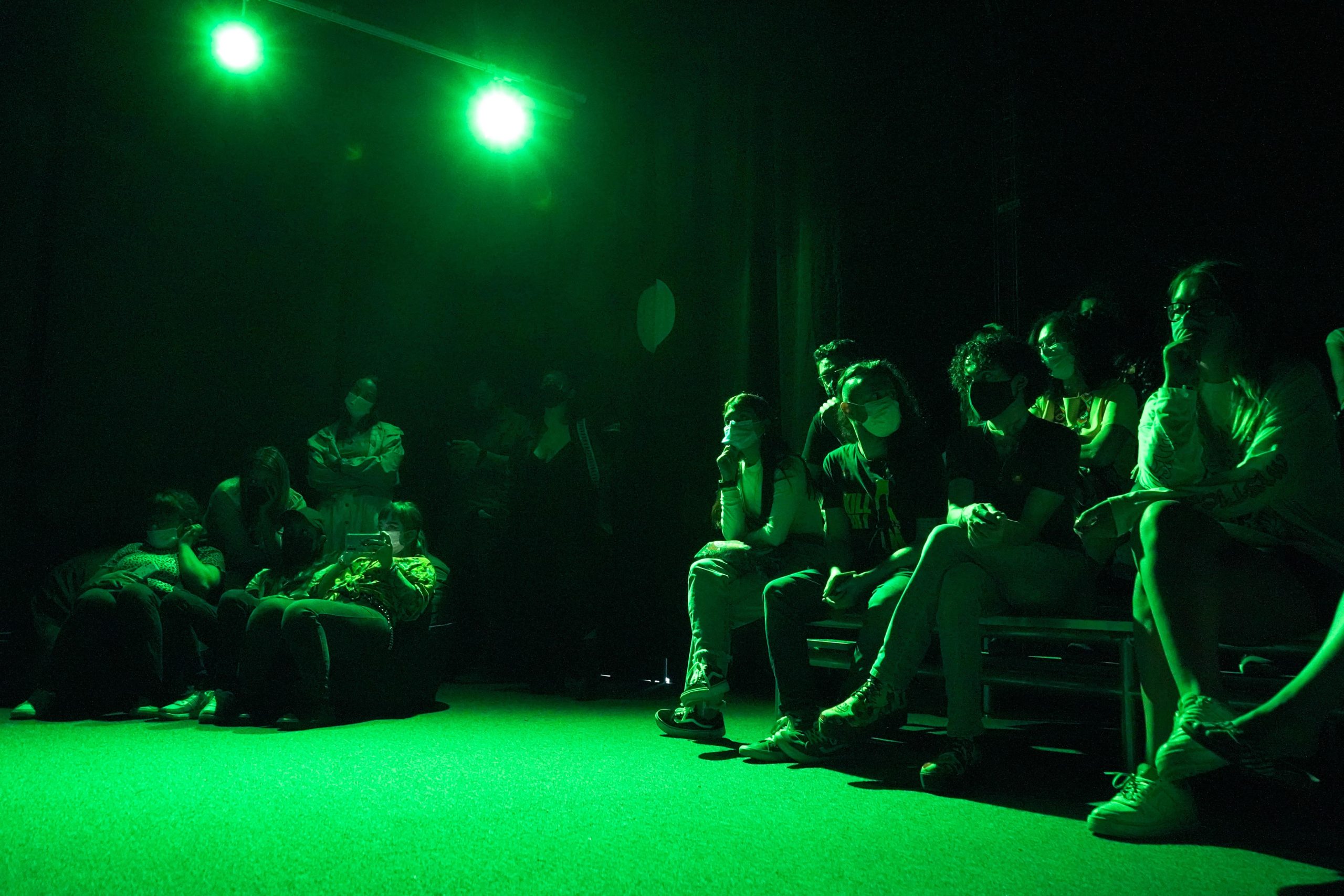
New Chronologies of Sound reflects on these questions and how the emergence of a new perceived time axis due to the global pandemic can influence creative processes. This exhibition comprises a diverse collection of 12 works, ranging from pure field recordings and processed soundscapes to more complex compositional approaches. These works, imbued with a strong poetic charge, are played on a loop through a multi-speaker system and last 50 minutes.
With the sound piece Masa (Mass), Spanish radio artist and researcher Laura Romero used archival recordings to interpret a scientific study that posits sound waves possess mass, or more precisely, negative mass. In the presence of a gravitational field, this mass propels its trajectory upwards, which could mean that sound waves are, in a sense, a form of antigravity. Based in Australia and founder of the Room 40 label, Lawrence English is a sound artist who, with his piece After Dark in Shizumi, momentarily interrupts the context of the pandemic, to navigate towards a safe space of pleasant memories that translates into the field recordings previously produced on the outskirts of Shizumi, Japan.
For her part, Berlin-based sound artist Kyoka presents her work BirdVoiceWindNoise, a departure from her more danceable creations, though it simultaneously retains some of her usual creative elements, such as a sharply honed rhythmic sense and deep, dense textures. In his piece Por ahora (For Now), Miguel Isaza explores the relationship between materiality and immateriality in the sonic context. He develops his reflection from a perspective that combines cosmological, metaphysical, scientific, and spiritual implications and reflections based on field recordings made in Medellín.
The exhibition also includes a piece by Portuguese artist Gustavo Costa, Luminous Flux, which captures the urban sounds of a night in Porto and identifies its acoustic rhythms and patterns, orchestrating them with other synthesized sounds to reconstruct, and even enhance, the listening experience. 10,001 Drops of Composer’s Blood represents the first experiment by British artist Matthew Herbert, a work focused on developing sonic forms by listening to one trillion sound events per hour. The piece was constructed from a single recording of his blood falling into a metal cup, broken down into 10,000 audible fragments.
Portuguese artist Hugo Branco presents his work Sterolized (We Shall Not Be Tamed), which focuses on the contrast between two particular sounds from the urban and domestic spaces of Aveiro during lockdown: while the sound of moving air evokes freedom, the sound of public hand sanitizer dispensers suggests fear and the subjugation of personal freedoms. Focusing primarily on sound sculpture, poetry, and new media, German artist Antye Greie-Ripatti (AGF) uses the sounds of a broken metal pier on the Finnish island of Hailuoto crashing against the rocks in her intense piece Friction, the Gate.
Originally from Aveiro, Diana Combo explores music and sound through multidisciplinary contexts while developing an experimental approach to sound composition and performance. In her piece Mosso, Poco Mosso, Quasi Calmo (excerpt), she combines recordings made in a deactivated cinema in southern Italy, proposing the idea of a “timeless” time and an “unlocatable” landscape, where temporal and geographical readings become blurred.
The Indian artist Budhaditya Chattopadhyay, in his work Indecent Whispers, begins with a conversation with the sounds of everyday objects, reflecting on the soundscapes of the unprecedented acoustic experiences that emerged during lockdown and were characteristic of that introspection. The work of the Colombian artist Natalia Valencia, meanwhile, includes compositions for large-scale ensembles, mixed music, acousmatics, and multifocal systems. Developed from sounds recorded in Brooklyn during lockdown, her piece Journey Through the Glass moves from interior to exterior spaces: through the glass into birdsong and the sounds of traffic. This work is composed of deep waves, suddenly disrupted by tapping or low-pitched sounds.
Finally, New Chronologies of Sound presents the work of Swedish sound artist BJ Nilsen, Three Locations, a piece based on three acoustic scenes recorded in Amsterdam between April and May 2020. These scenes aim to illustrate the changes brought about by the pandemic in areas that were once saturated with tourism and were suddenly reclaimed by city residents.
The exhibition addresses a specific characteristic of the pandemic experience and other global events: their exceptional capacity to alter the perception of time. Specifically, each event that spans planetary dimensions generates a new perceived time axis: a “before-during-after” relationship perceived collectively and shared on a global scale. In the case of Covid-19, if “before” signifies what most Western societies have unconsciously come to consider normal, and “during” refers to the situation of lockdown, reopening, or re-lockdown, depending on each local context, then “after” insists on presenting itself as an absolute enigma, open to endless new speculations, anxieties, and expectations. New Chronologies of Sound is presented as an interpretation of “during” to glimpse what still awaits us, or that “after” that slips through our fingers.
The exhibition New Chronologies of Sound is presented in partnership with Vic Nic, Teatro Aveirense, the Aveiro City Council, and Aveiro Arts House.
________________________________________________________
¹ During 2020, numerous articles and studies were published addressing how soundscapes were affected by the Covid-19 pandemic: publications related to sound studies such as the Journal of Sonic Studies or the Cities and Memory platform, other specialized publications such as De Gruyter, Frontiers.Org or Places Journal, and even mass media outlets such as the New York Times, Bloomberg or Associated Press. In addition to the diversity of sources, these articles also cover different angles, ranging from the possible effects on public health produced by either the reduction or increase of different types of sounds during lockdown to the global quieting of high-frequency, human-generated seismic noise. Similarly, amidst the profusion of perspectives, topics emerged such as how the silencing of the underwater soundscape during the pandemic contributed to efforts to mitigate the impacts of ship noise, and others concerning how to maintain the ecological integrity of marine protected areas, or one as unique as the astonishing metamorphosis of New York’s daily soundscape. It became clear that the global reduction in human activity had drastically affected anthropophony (sounds generated by humans), biophony (the resonance of living organisms), and consequently, also our perception of geophony (non-biological sounds) and cosmophony (the music of the stars).
¹ Coming from loudspeakers.
Relive the experience