

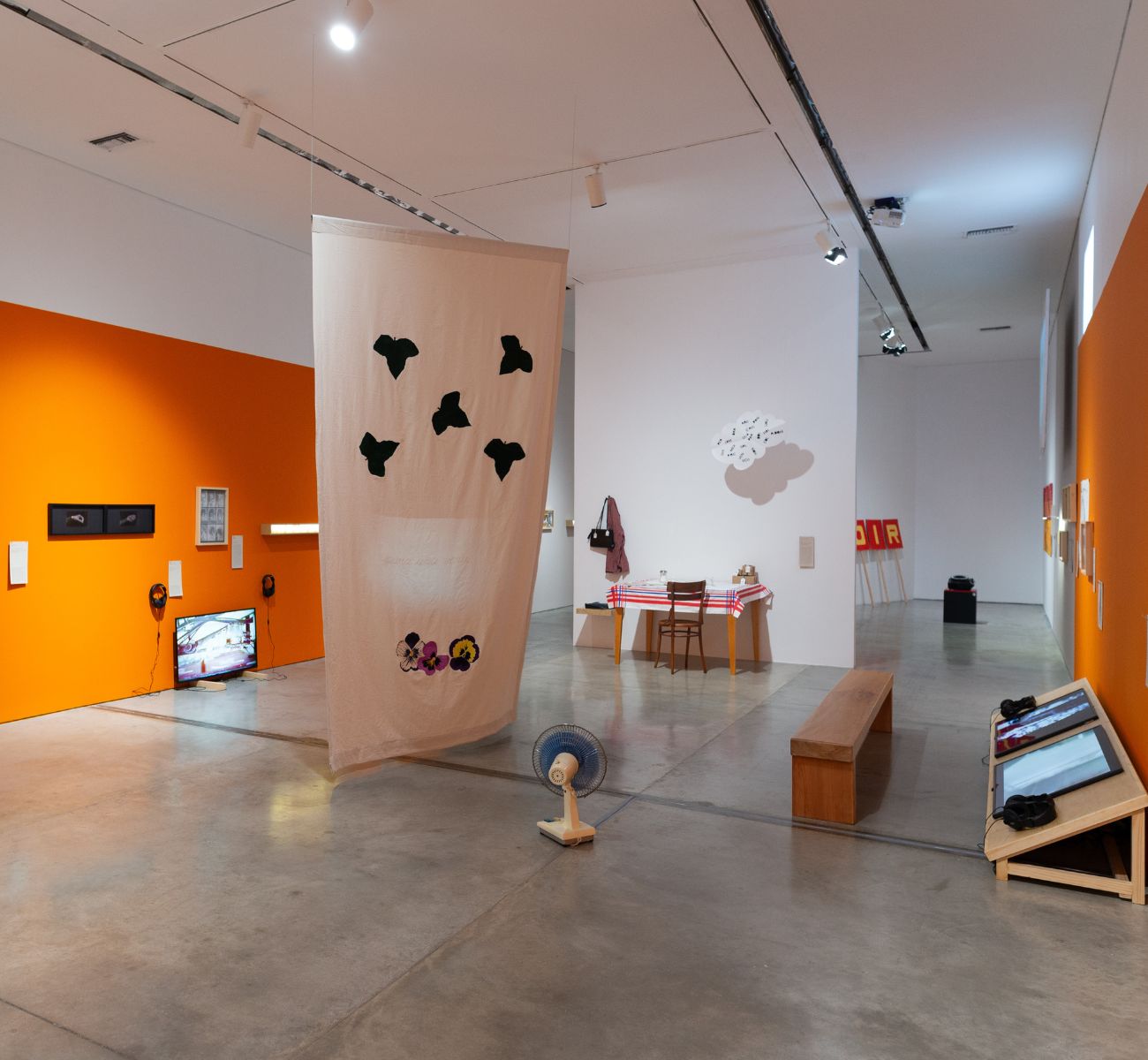
 From 02 of October 2024 to 16 of February of 2025
Artists and collectives: Grupo Março, Marta Minujin and Leopoldo Maler, Yeni y Nan, Carlos Echeverry, Antonio Caro, Gloria Gómez Sánchez, Grupo CADA, Teresa Burga and Marie France Cathelat, Felipe Ehrenberg, Álvaro Barrios, Álvaro Herazo, Alfonso Suárez, Antonio Iginio Caro, Delfina Bernal, Eduardo Hernández, Gilles Charalambos, Ida Esbra, Jonier Marín, Jorge Ortiz, Rosa Navarro, María Evelia Marmolejo, Sandra Llano-Mejía, Carlos Zerpa, Luis Villamizar, Carmela Gross, Anna Bella Geiger, Pedro Terán, Claudio Perna, Diego Barboza, Emilio Hernández Saavedra, Lotty Rosenfeld, Magali Lara, Julián Posada, María Rodríguez, Jorge Eduardo Eielson, Marco Antonio Ettedgui, Yvonne von Mollendorf, Rolando Peña, Cildo Meireles, Equipo TRansHisTor(ia), No-Grupo, Polvo de gallina negra, Adolfo Bernal, Grupo Proceso Pentágono, Signo x Signo, Antonio Días, Ulises Carrión, Alonso Castrillón, Rodrigo Castaño, (Hersúa, Helen Escobedo, Federico Silva, Sebastián, Mathias Goeritz), David Escobar and Ana Sofía Buriticá, Wallace Masuko and Ana María Montenegro.
The term “non-objectualism” was based on the search for what Acha called “an independent visual thought,” which was a type of visuality that looked at the local reality by rethinking the participation and presence of the audience through different sensitive mechanisms. In this context, a diverse array of artistic practices was emerging. encompassing geometrisms, political printing, environmental, action and process art. public sculpture, ephemeral experiences, the use of media, conceptual attitudes, and technological integration. Acha believed that these novel forms of social engagement with the visual arts had the potential to engender a transformation of sensibility and, consequently, a shift in mentality that would facilitate political change.
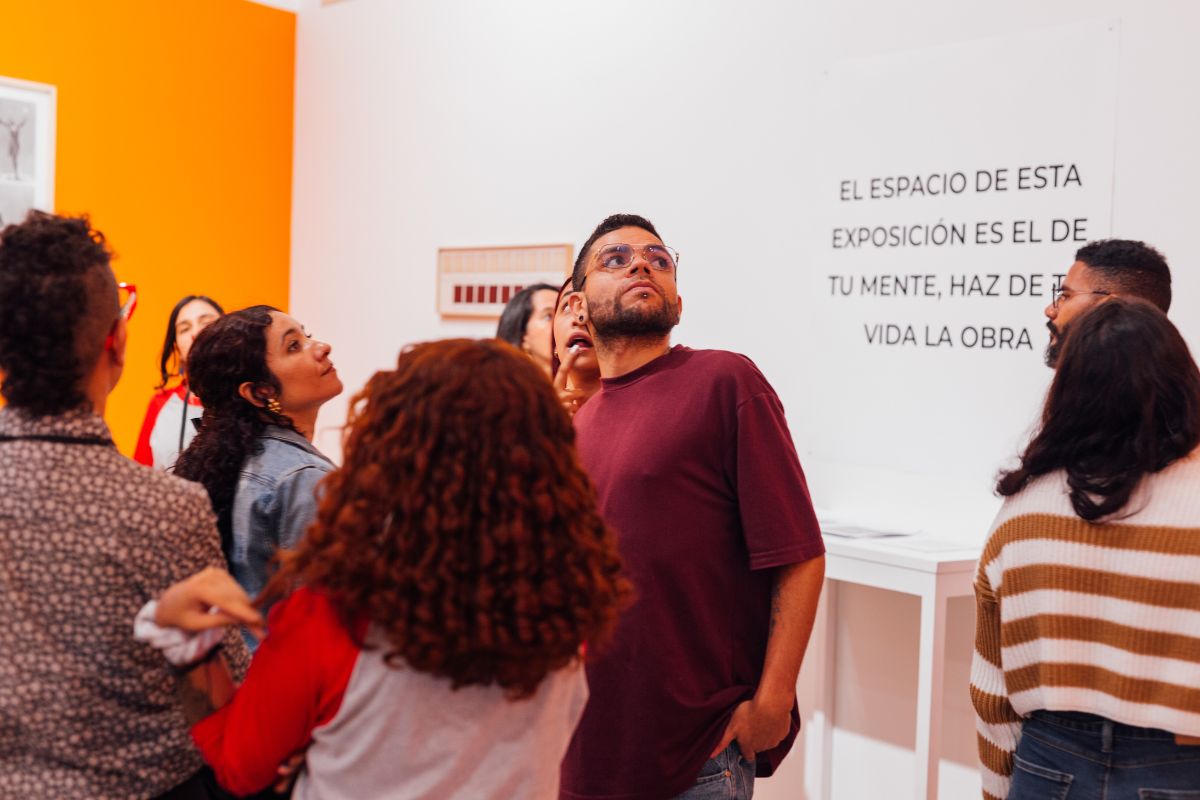
This exhibition offers a reinterpretation of the long 1970s in Latin America, a period that commenced in the mid-1960s and extended until the early 1980s. The works presented here prompt us to examine this period from a perspective that recuperates the particularity of its discourses and the historical context in which they emerged. The examination of humor, political critique, play and playfulness, the dissolution of art in everyday life, and the urban experience as a symptom of new subjectivities directly questioned the social reality of our region. It is not uncommon to find in this selection of works critiques of colonialism and North American intervention, as well as demands for ecological awareness, engagement with feminism, and articulations with popular struggles.
Consequently, the exhibition delineates productions that were integral to the conceptualization of the term at the outset of the 1970s. However, it also traces its genealogy to one of the pivotal moments of non-objectualism: the First Latin American Colloquium of Non-Object Art and Urban Art, which was held precisely at the Medellín Museum of Modern Art in 1981. This exhibition aims at revising the term in accordance with one of the primary objectives of non-objectualism: to identify visual emancipation strategies from Latin American contexts, thereby reframing artistic practice as a radical exercise of freedom.
Click on Amorosamente excluyente and discover this work by artist Wallace Masuko, which is part of the exhibition.
Relive the experience
Supported by
