 From 07 of October 2020 to 28 of August of 2022
Artists: Jorge Julián Aristizábal, Ever Astudillo, Alicia Barney, Adolfo Bernal, Jacobo Borges, Patricia Bravo, Luis Caballero, María Teresa Cano, Juan Cárdenas, Antonio Caro, John Castles, Nicolás Consuegra, Fabio Daza, Wilson Díaz, Juan Mejía, Carlos Echeverri, María Dolores Garcés, Ethel Gilmour, Mathias Goeritz, Gertrude “Gego” Goldschmidt, Beatriz González, Clint Imboden, Beatriz Jaramillo, Lorenzo Jaramillo, Óscar Jaramillo, Humberto Junca, Norman Mejía, Armando Montoya, Óscar Muñoz, Jorge Ortiz, Luis Ospina, Ana Patricia Palacios, Gabriela Pinilla, Gloria Posada, Julián Posada, Gerardo Ravasa, José Alejandro Restrepo, María Victoria Restrepo, Carlos Rojas, Miguel Ángel Rojas, Luis Roldán, María Isabel Rueda, Bernardo Salcedo, Steven Thomas, Fernando Uhía, Juan Camilo Uribe, Marta Elena Vélez, Ana Cristina Vélez and Hugo Zapata
Influenced by the vision of critic and curator Alberto Sierra, these spaces fostered emerging and experimental art during the 1980s and 90s; years of ideological shifts and prolific speculation that have resulted in the collection now bearing witness to the substantial changes forged in the cultural landscape during those years.
Furthermore, the MAMM was a key space for legitimizing and disseminating the Pan-American Graphic Arts (AGPA) project, and its holdings include a complete collection of its 22 editions. From the project’s unique perspective, this collection speaks to the rise of printmaking, which left such a strong imprint on the formation of contemporary artistic practices in Latin America.
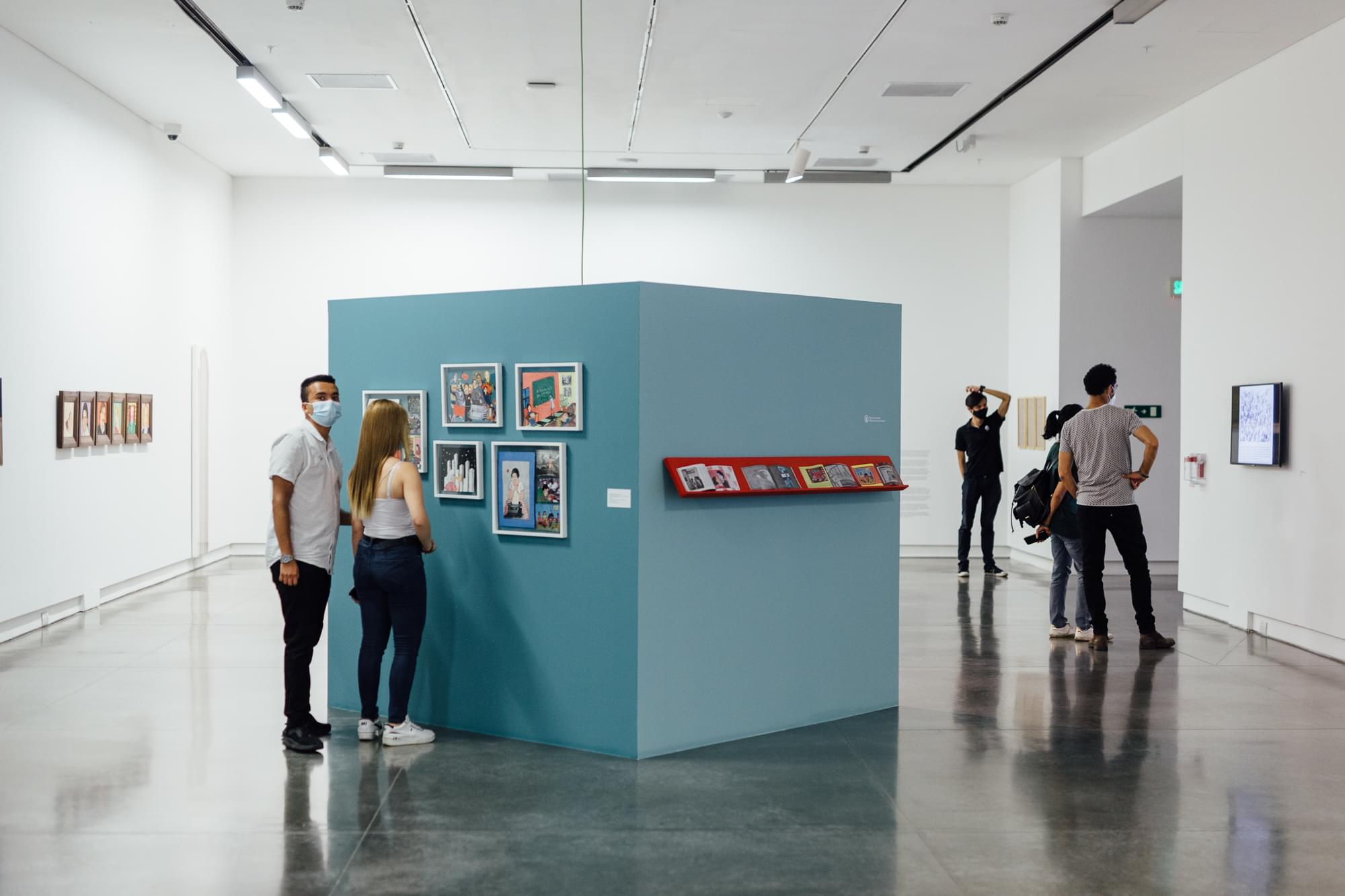
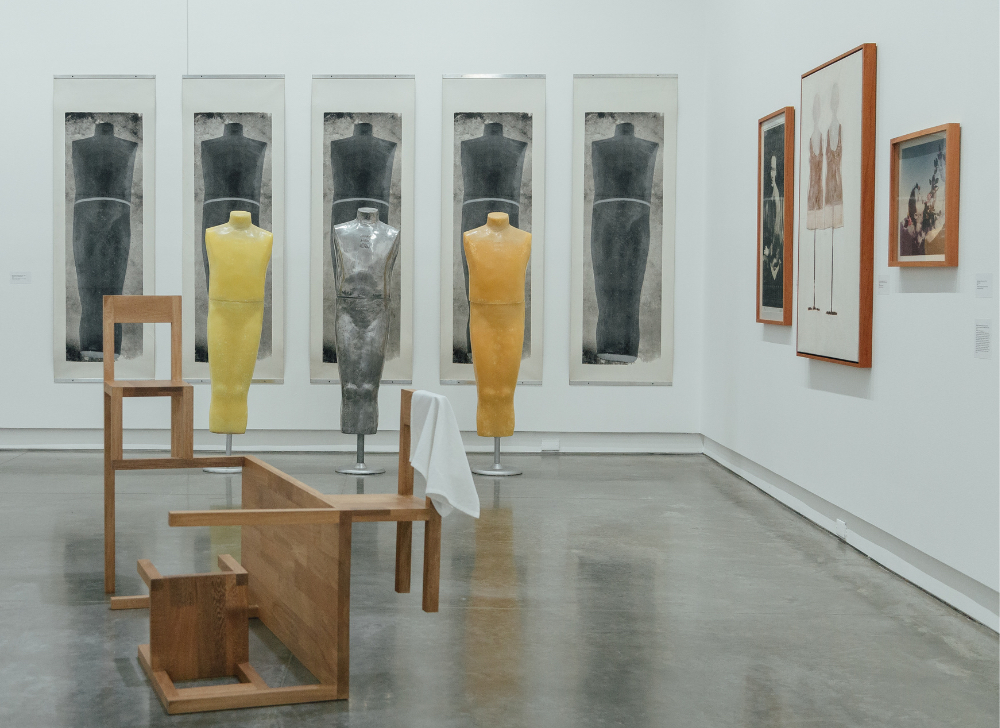
Regravado (Mixtape): Transitions of Art in the MAMM Collection brings these two facets of the museum’s holdings into dialogue through a selection that allows us to observe some of the fundamental shifts in the consolidation of contemporary art in Colombia during the last decades of the 20th century. The exhibition has 4 cores, 4 “transitional vectors” or 4 rap songs from Medellín that are recorded in the imaginary mixtape that is the soundtrack of the exhibition.
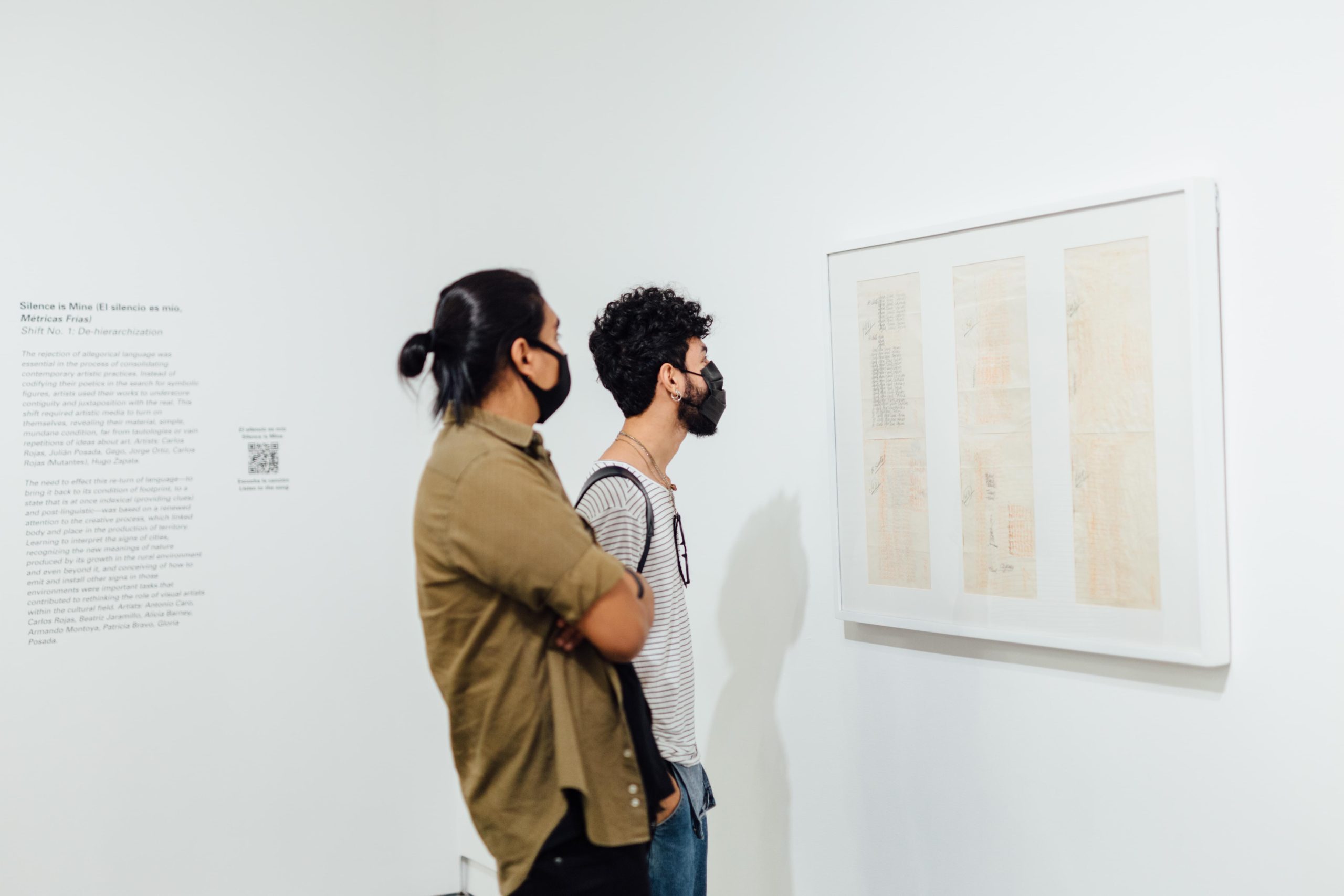
Silence Is Mine (Cold Metrics)
Transition 1: Dehierarchization
The abandonment of allegorical language was an essential process in the consolidation of contemporary artistic practices. Instead of basing their poetics on the search for symbolic figures, artists strengthened the contiguity and juxtaposition with reality in their works.
Don’t Worry About Me (Crudo Means Raw, Lianna, Mañas, Vic Deal)
Transition 2: Decline of Genres
In the last decades of the 20th century, the unstoppable growth and transformation of cities, on the one hand, and an increasingly broad and diverse consumer culture, on the other, profoundly transformed identity construction. The effect of this transformation was the breakdown of modern units of subjectivation such as family, profession, religion, and nationality.
The Last Speaker (Anyone)
Transition 3: Demystifying History
The end of the Cold War, heralded with the fall of the Berlin Wall in 1989, was accompanied in Colombia by the “escalation and degradation” of the armed conflict. The role of images in representing the conflict, in the processes of documentation, historicization, and memory construction, has itself been a minefield.
Not for Sale (Alcolirykoz)
Transition 4: Crisis and Evolution of the System (of Art)
Since the 1960s, printmaking has proven to be one of the most prolific fields of artistic experimentation surrounding the transformation of the “social contract of art.” The desire to overcome the cultural gap between art and the public, created by a closed and elitist institutional framework, led many artists to experiment with printmaking due to its precariousness, reproducibility, versatility, and the connections it allowed for establishing with other worlds and uses of printmaking, such as design, advertising, and even the domestic and intimate sphere.
Relive the experience