

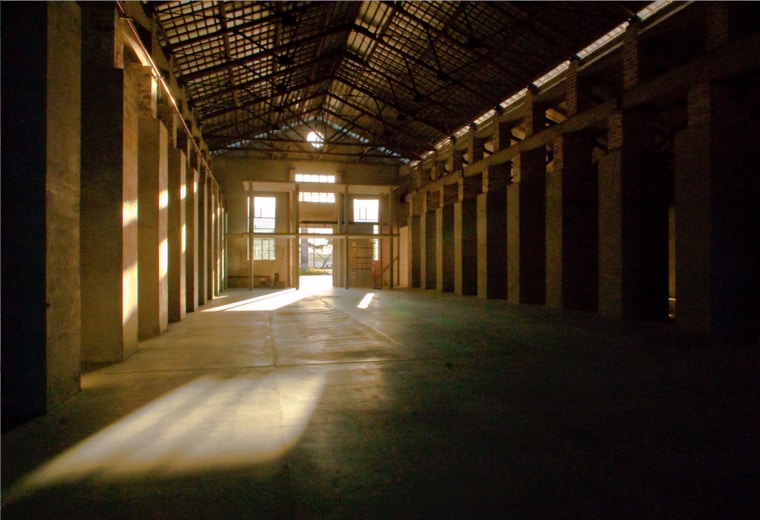
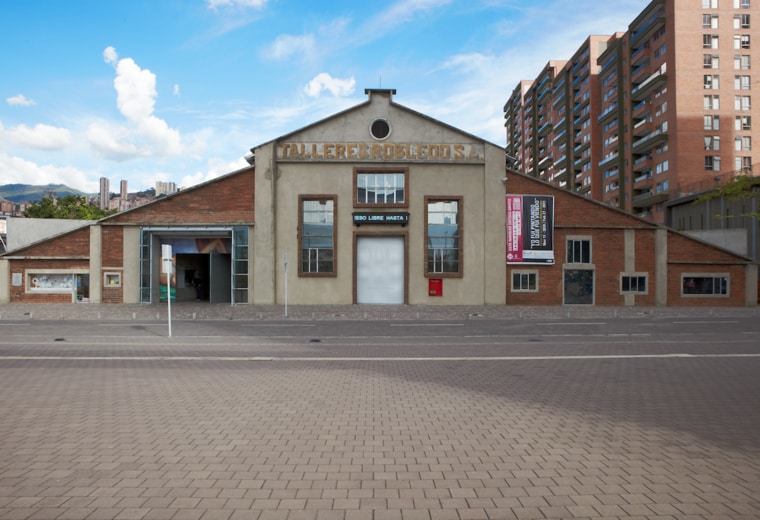
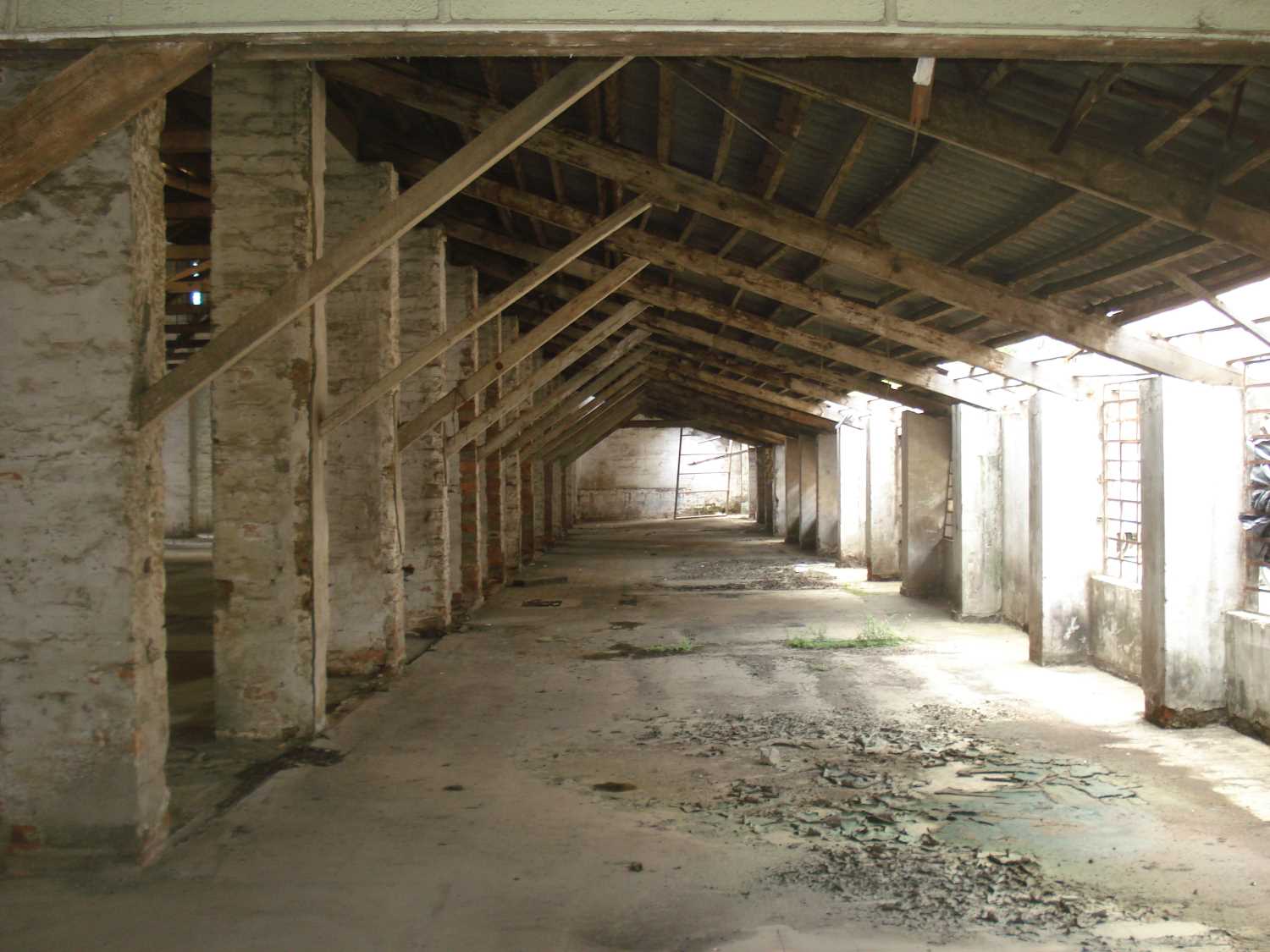

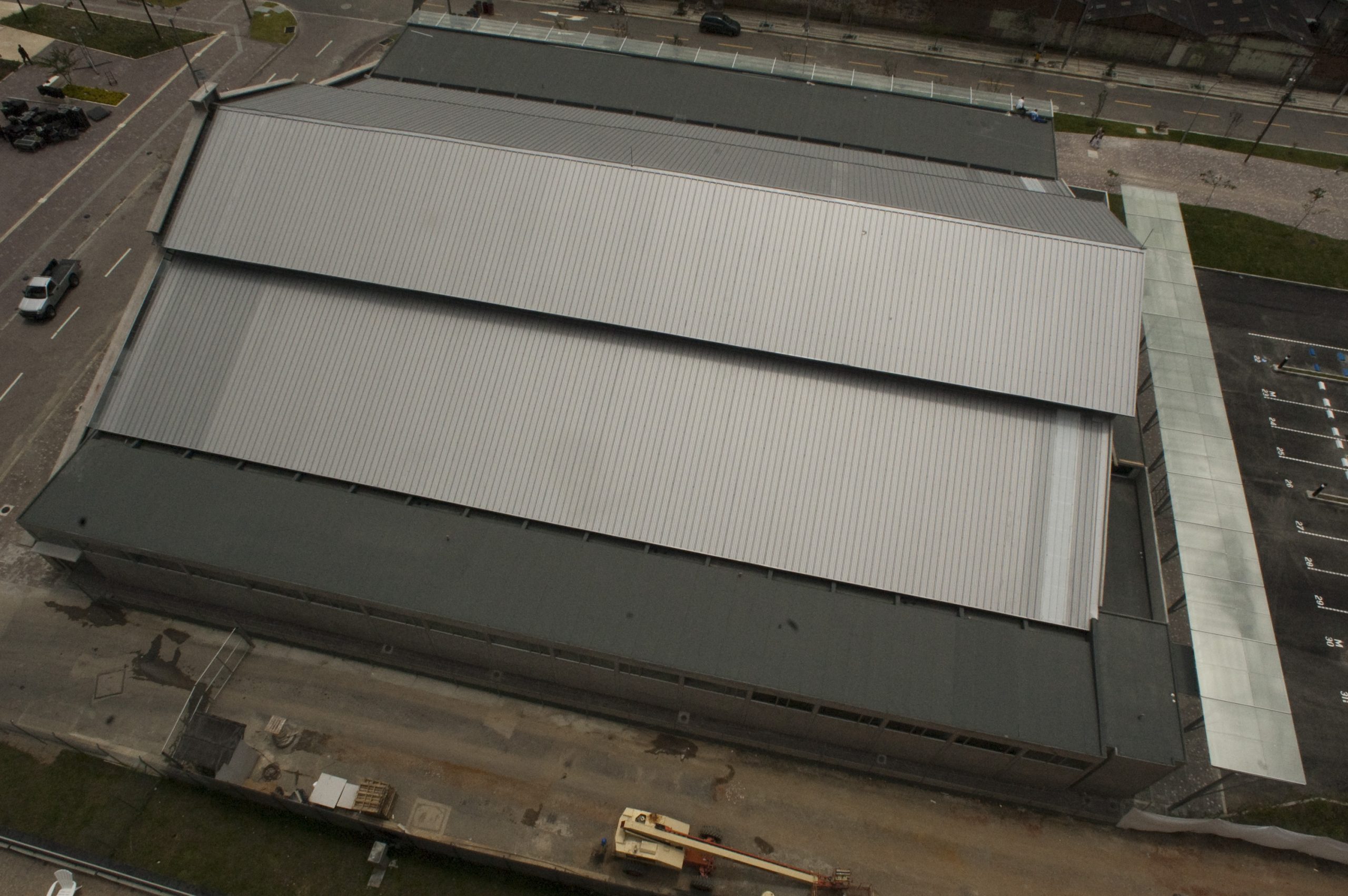

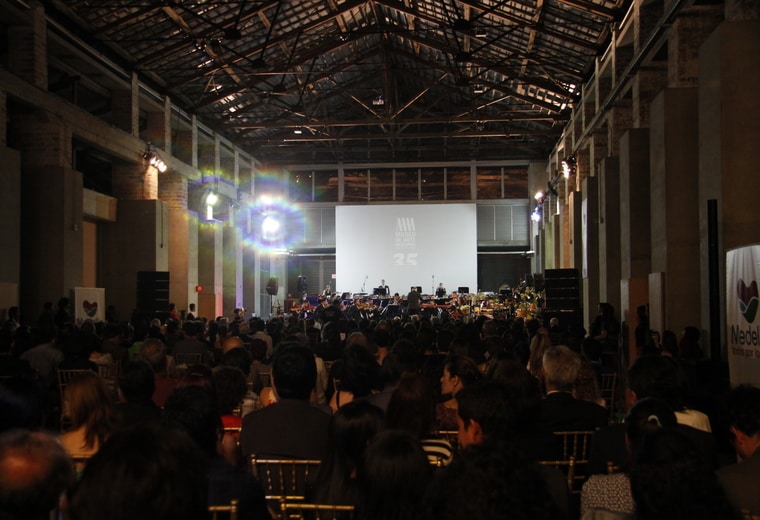

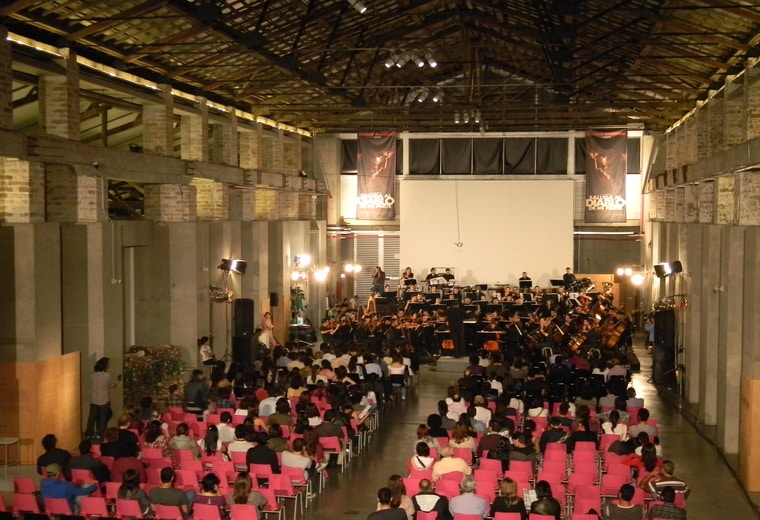
The Medellín Steel Company (Simesa) was founded in 1938 and dedicated itself to steel and metal casting at the Robledo Workshops. In 2003, all industrial activity ceased, and a plan was established to repurpose the building as a cultural institution. The Gran Manzana de Simesa Partial Plan—soon to be known as Ciudad del Río—was conceived as an urban renewal project, seeking to redirect the area’s industrial focus. In 2006, the Medellín City Hall awarded this emblematic building to the Museum of Modern Art of Medellín (MAMM) in recognition of its efforts.
The Robledo Workshops were restored by the Utopía group between 2007 and 2009 and would become a unique space for art in the country. The central nave (Foundry Room) and the main façade, with the Talleres Robledo sign first painted in 1944, were preserved.
On November 4, 2009, the Museum’s new headquarters in Talleres Robledo were inaugurated, marking the beginning of its 30th anniversary celebrations. The move to this new urban space led to the formalization of the Curatorial and Education and Culture departments, as well as access to international exhibition circuits, thanks to the international standards of its new exhibition halls. The professionalization of the installation and exhibition processes paved the way for hosting international contemporary artists such as Jan Fabre, Carlos Garaicoa, Sophie Calle, Luis Camnitzer, and William Kentridge.
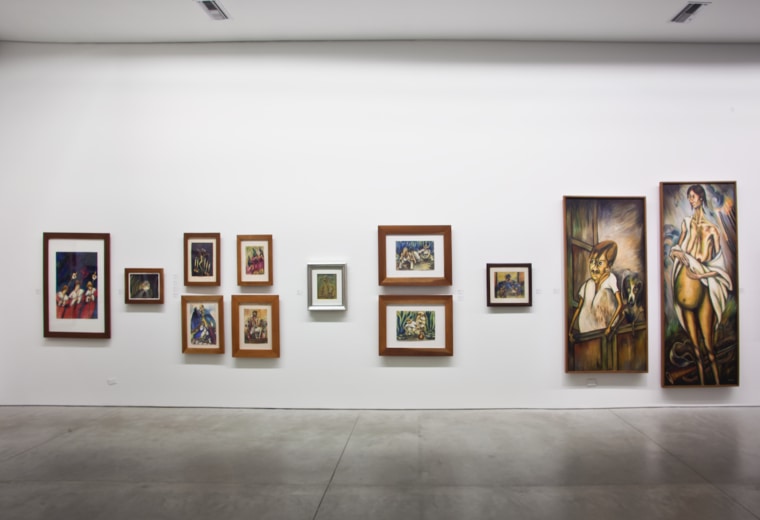
The expansion of the spaces also allowed for the circulation of the Museum’s collection and the creation of new exhibition sections. In 2010, the Tributes program was inaugurated with the exhibition “I Was Painting What I Was Seeing,” curated by Alberto Sierra, which featured the work of the renowned artist Débora Arango. The second iteration of the program presented a retrospective of the work of Beatriz González (Bucaramanga, 1938), curated by Alberto Sierra and Julián Posada, titled “Comedy and Tragedy: A Retrospective 1948-2010” (2011). The third iteration of the program was dedicated to the work of the Colombian draftsman and painter Luis Caballero (Bogotá, 1943-1995). In partnership with the Banco de la República, “Desire and Torment” (2012) brought together approximately 56 of the artist’s works.
A new exhibition program sponsored by the Celsia company was also launched. In 2014, Programa C was launched as a project to showcase the work of emerging Colombian artists, providing a new platform for young creators.
The Education area also experienced significant growth in its programs. With the support of the Medellín Mayor’s Office of Citizen Culture, the Open Access to Art program was created in 2009, offering free admission to galleries, guided tours, and access to training workshops. That same year, in partnership with Bancolombia, The City of Children was launched, “a space for children to experience and dream about their city,” drawing on the ideas of the Italian educator Francesco Tonucci. The project represents an effort to connect art with civic education and inclusion in the city through visual and literary creation.
Passport to Art, led by artist and educator Fredy Alzate, was another strategic program. This space for interaction with the general public, and especially students, provided access to the ideas surrounding the work of artists and the field of art, and featured more than 160 programs.
The move to Talleres Robledo also fostered a new space known as Extended Night, a meeting place in the evening: the Museum remains open, with free admission, until 10:00 p.m. On the last Friday of each month, the Museum opens and offers a cultural program that includes an open-air film screening in the Plaza. The management of the Linear Park presented a challenge for the Museum starting in 2011, not only in terms of maintenance but also in terms of revitalization.
Educational and cultural programming began to gain greater importance in this new space. LabSurLab was an experimental event promoted by the Museum with the participation and collaboration of various collectives from Latin America. This gathering, held in 2011, was a platform for dialogue, exchange, and creation. A laboratory dedicated to exploring and seeking alternatives for the social uses of technology, and to developing and sharing strategies for production and research at the intersection of art, science, and technology with a social commitment.
As part of its outreach to the public, the Museum launched the radio program Fundiciones MAMM in early 2011, broadcast on the Medellín Chamber of Commerce’s radio station at 95.9 FM. By 2018, it had aired nearly 300 episodes and was conceived as a radio art program.