

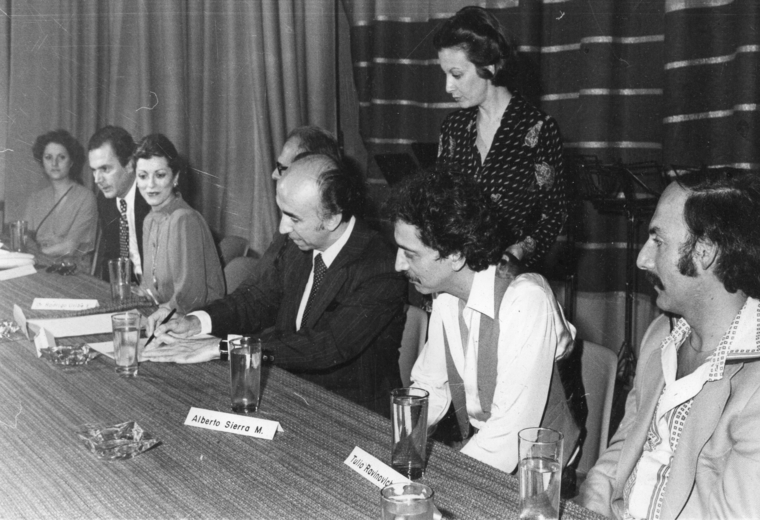
In 1978, an institution was born that represented the paradigm shift the city was experiencing and embraced contemporary artistic practices. The generous donations of nine founding artists initiated the permanent collection: Beatriz González, Hugo Zapata, Álvaro Marín, Javier Restrepo, Juan Camilo Uribe, John Castles, Marta Elena Vélez, Germán Botero, and Rodrigo Callejas.
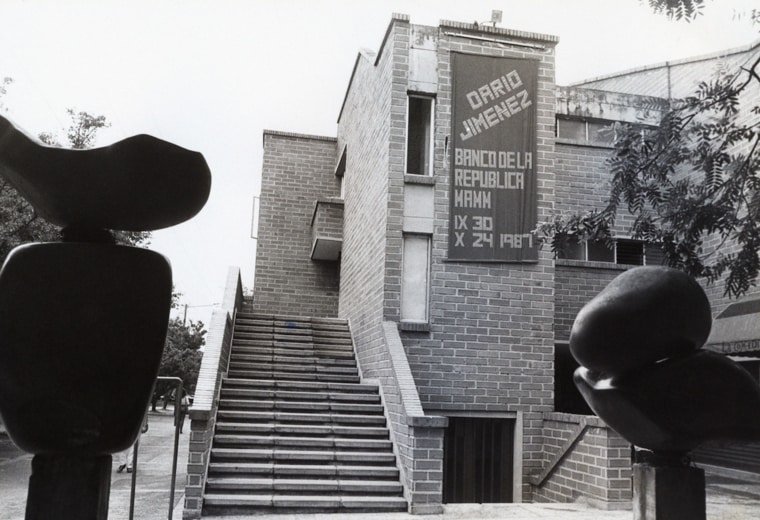
Two years after its founding, the museum opened its first location in Carlos E. Restrepo, a neighborhood built in the late 1960s, where intellectuals, professors, students, and cultural managers lived and worked. This marked the beginning of an important exhibition, educational, and cultural program in Medellín. Art historian Carlos Arturo Fernández described the MAMM during the Carlos E. Restrepo period as “a museum centered on the city,” due to its role as a space from which to reflect on the city, the urban environment, and the public sphere.
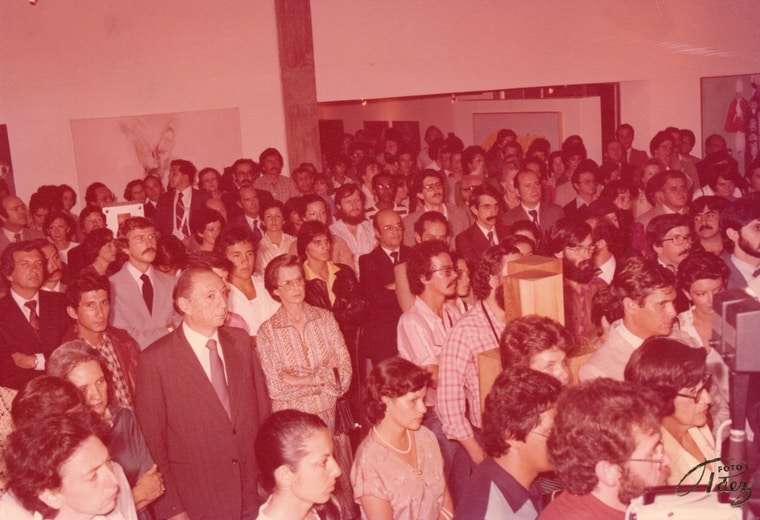
On April 22, 1980, we opened our doors to the public with the inaugural exhibition, “Art in Antioquia and the 1970s,” an exhibition that sought to establish the relationship between “traditional art” in Antioquia and the generation of artists emerging under the influence of contemporary international movements and styles, known as the Urban Generation.
A year after inaugurating our headquarters, in May 1981, we held the First Latin American Colloquium on Non-Objective Art and Urban Art, in which non-objectualism, a term coined by the Peruvian critic Juan Acha, was debated. The exploration of the relationships between art and design, and between art and the urban environment, at the Colloquium were fundamental axes in the development of programs and content during the Museum’s first phase.
The opening to young artists, with programs such as the Arturo and Rebeca Rabinovich Salon, between 1981 and 2001, was a very significant moment for the Museum. The prize was conceived as a competition to stimulate and contribute to the development of young artists under 30, and it attracted 358 participants working in painting, drawing, printmaking, performance, installations, and video art. The first winning work was María Teresa Cano’s “Yo servida a la mesa” (Me Served at the Table). Some of the artists who participated in the competition included José Antonio Suárez Londoño, Nadín Ospina, María Fernanda Cardoso, Juan Fernando Herrán, and Fredy Alzate.
In terms of exhibitions, the first shows referenced the history of art on the regional and national stage, fostering a closer relationship between local artists and the general public: The New Painters of Antioquia (1984), History of Photography in Colombia (1984), History of Architecture in Colombia (1985), Watercolor in Antioquia (1987), Printmaking in Antioquia (1993), Fifty Years of Painting and Sculpture in Antioquia (1994), Poetry of Nature: A Vision of the Landscape in Antioquia (1997), Horizons – Other Landscapes 1950–2001 (2001).
In 1982, the Museum received a series of graphic works belonging to the Pan-American Graphic Arts Program (AGPA), sponsored by the paper, cardboard, and packaging manufacturer, Smurfit Kappa. Each year the company donated an average of 25 works, and the program continued until 2004. A total of 420 prints were received.
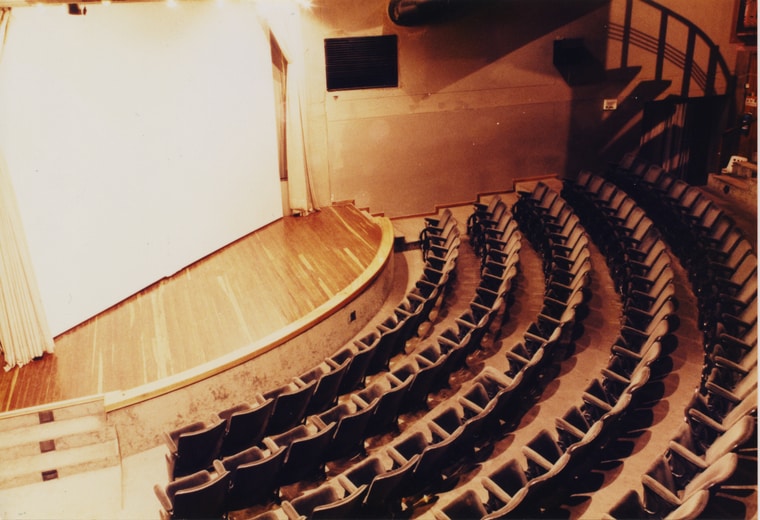
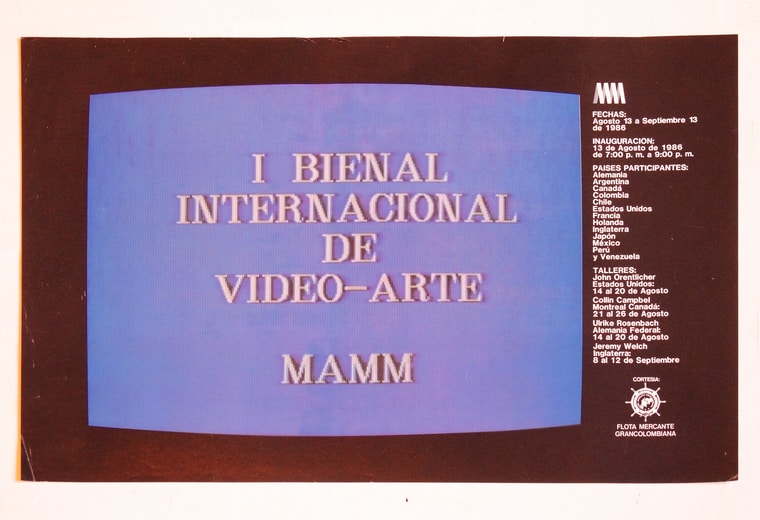
Regarding its involvement in public art, the MAMM participated in three projects between 1983 and 1989: the Sculpture Park (1983), the National Competition for the José María Córdova Airport (1984), and the Riogrande II National Art Competition (1989). In 1986, we inaugurated our cinema, an auditorium with a capacity of 215 people, which operated under the curatorship of Francisco Espinal, director of the El Subterráneo film library. That same year also saw the arrival of the International Video Art Biennials, a pioneering initiative in Colombia that ran for four editions until 1992.
As for the Museum’s collection, it was formed informally and almost spontaneously. In 1987, the artist Débora Arango donated a collection of 233 paintings during her lifetime. This donation was later supplemented by one from the family of the artist Hernando Tejada, as well as a collection of 480 black and white photographs by the early 20th-century Colombian photographer Benjamín de la Calle (1869-1934). The growth of the collection was one of the reasons why, in 2006, the municipal government considered the MAMM (Museum of Modern Art of Medellín) the ideal institution to receive support for a new building.