

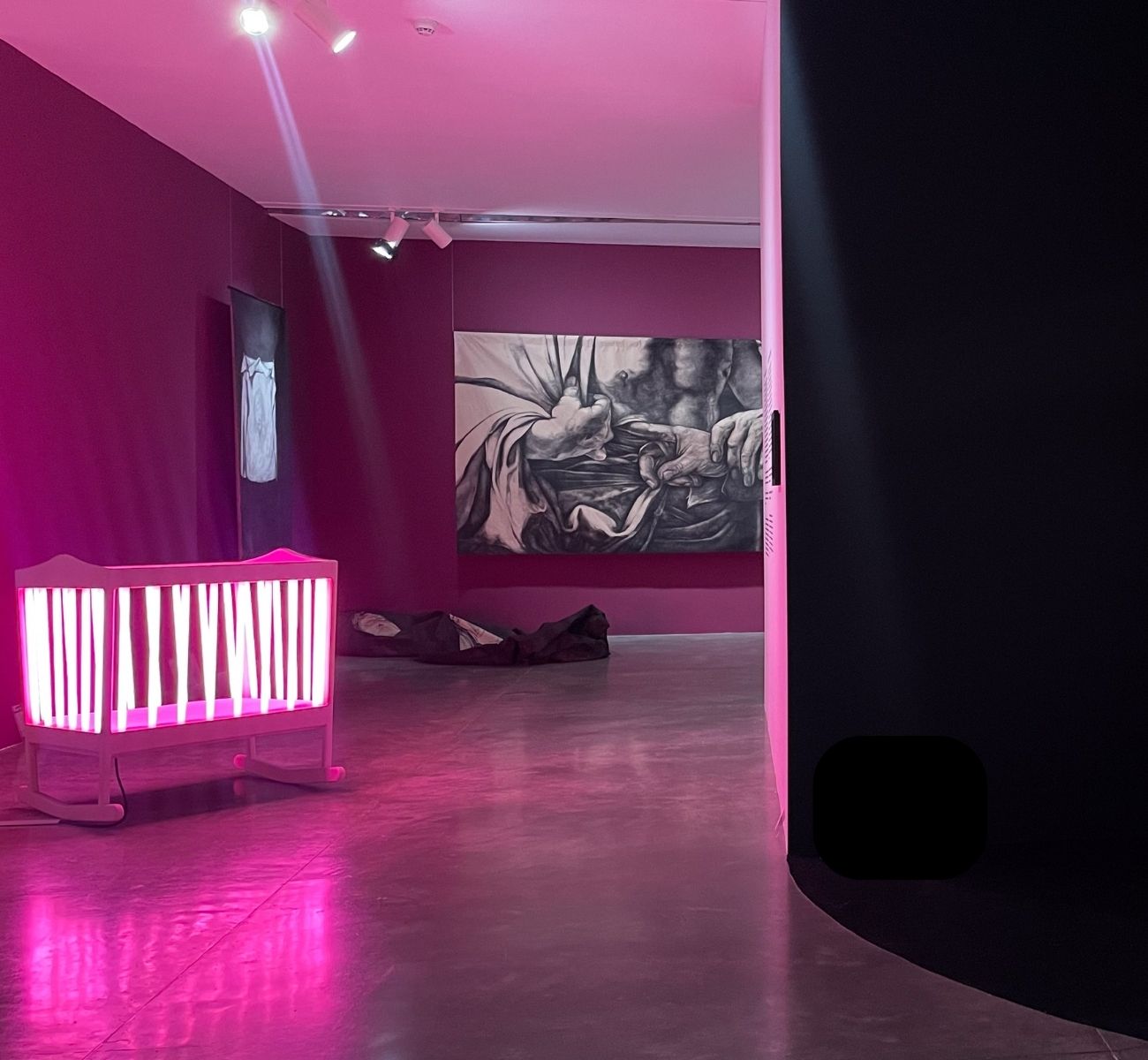
 From 10 de May 2023 al 09 de July del 2023
Artists: Estefanía Baena Barón, Benjamín de la Calle, Camilo Castaño, José Gallardo, Germán Alonso García, Felipe García, Astrid González, Laura Jiménez Galvis, Glenda León, Luz Lizarazo, Andrés Matías Pinilla, Agustín Nicolás Rivero, Hebert Rodríguez, María Roldán Ruiz, Johan Salazar, Jessica Santos, Daniela Serna, Andrés Felipe Solano, Sonnia Yepez.
I. Primordial Light of Creation (Giving Birth): Eros
To possess with the eyes (first and foremost) and to desire (with all the other senses), then—perhaps—to succumb to temptation: nervous and submissive. Therein lies the premise that embodies eroticism, that force that stirs the soul. The exuberance of desire that moistens the flesh, that overwhelms reason. Delirium.
What has become of the forms of eroticism that spring forth in the creative act of artistic making?
To create—with an aesthetic purpose—is an act that permeates the bodies that create. It is insatiable longing. It is uncertainty. It is loss. It is excitement. It is impotence. It is suffering. It is delight. It is brutality. It is pain. It is daring to anticipate the event of beauty. It is the deformed idea. It is the silent conversation. It is affecting with intuition that organism which is matter (tangible or intangible). It is resistance to the failed gesture. It is to give birth to a poetics. It is also to die (in ecstasy).
And even when it is a collective act, the creative bodies—restless, together—struggle, writhe, touch, repulse, and love one another.
Is this not, perhaps, the beautiful and cursed act, the cumulative manifestation of an eroticism?
[Desire imposed its own excesses: it demanded that I abandon myself to the trance of language: its temperature, its weight, its erotic bond. C. Maso, 1996]
[Between bursts of laughter and abysses of anguish, surfaces of wit and depths of philosophical reflection, Goya’s Caprichos are debated. Obsessions abound. Overflowing with images created by the artist. G.D. Huberman, 2010]
II. Beauty will be convulsive or it will not be*
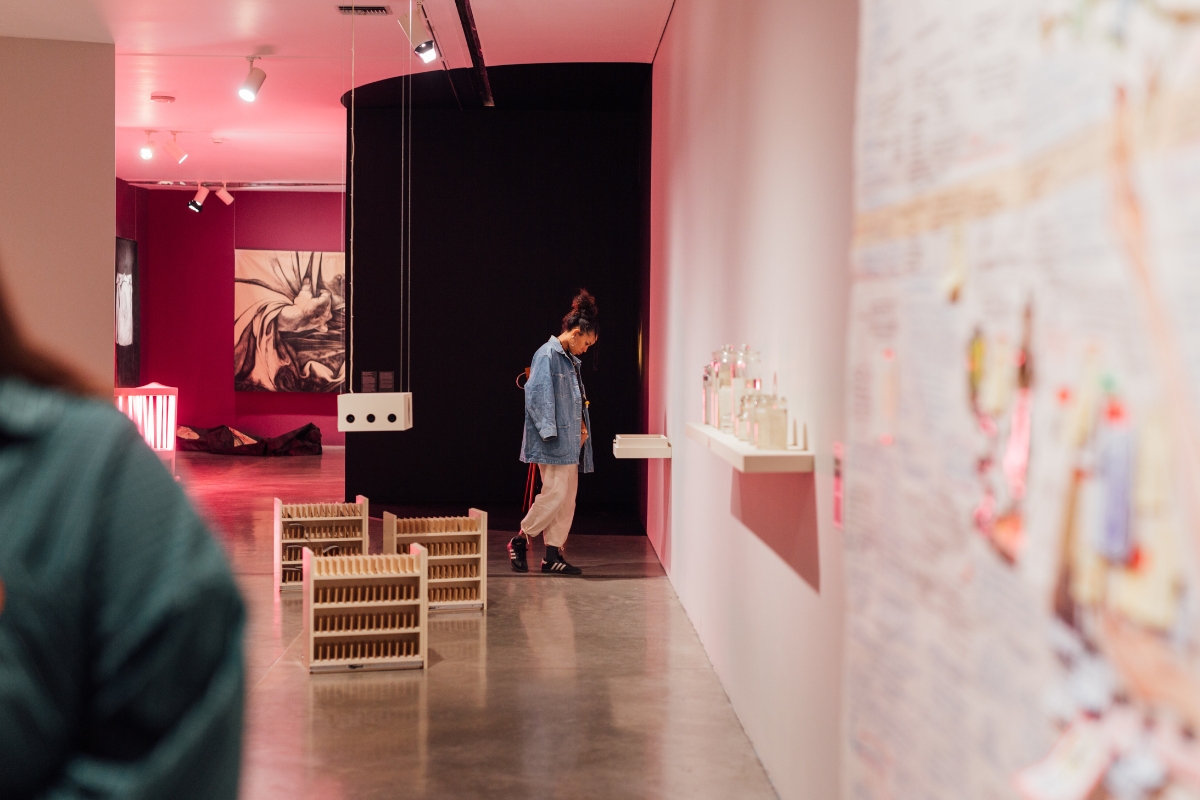
Here is a feast. One more tragic than jubilant. Here is a choreography of bodies—materials that unsettle us, almost touch us. This exhibition suggests a return to the sensuality of art, to discovering the eroticism it evokes with its aesthetics. In this curatorial exercise, there is no beautiful form that does not engender the terrible and therefore fail to seduce us. We attend the feast eagerly, without thinking about what we will find, and these poetic materialities may attract us or, on the contrary, cause us repulsion. They may even discourage us to the point of detesting them. But that is precisely what the aesthetic experience is about: being there with art, taking the time to allow it to delve into us. It is the event of a double gaze: one that lays bare and shows us the atrocities, the violent (not explicit) beauties of this world. Are we capable of devouring the images that art produces: its knowledge, the ideas that tremble within them?
When we are aroused, we are vulnerable; we become more malleable. That’s why all forms of eroticism exert such a powerful influence on our bodies.
[All curating is a promise, and like any promise, it is also a bold gesture that can be betrayed by future events.]
* This sentence closes André Breton’s novel Nadja (1928). The work was a writing experiment in which Breton indulged in poetic forms. His work is a montage of fragments that intertwines art, life, theory, and speculations on beauty, which is also excess; in fact, the story ends with an accident (with that particular image). It was, in itself, an exercise marked by an intellectual and aesthetic eroticism. Nadja, more than the character herself, is the presence of a seductive form that affects the behavior of others (did Nadja perhaps personify art itself?).
Image: Laura Jiménez Galvis, Das unheimliche (Disturbing Strangeness) (fragment), 2014
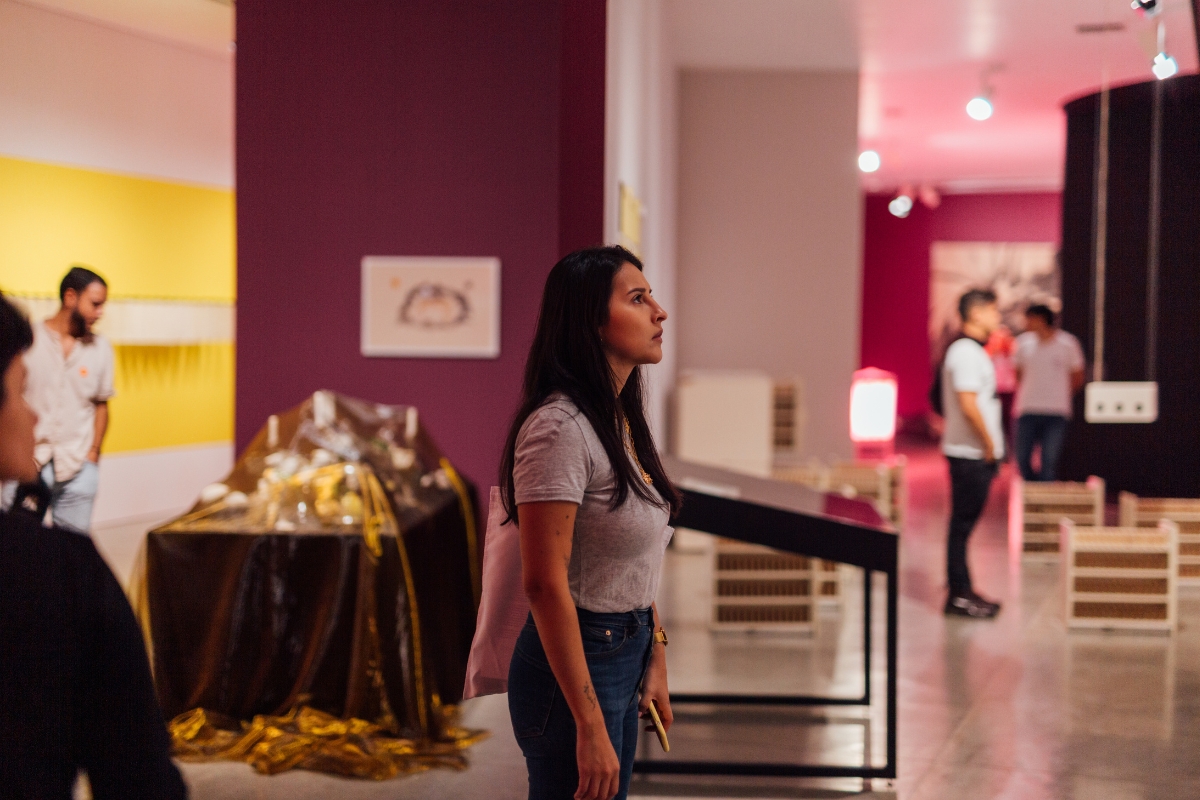
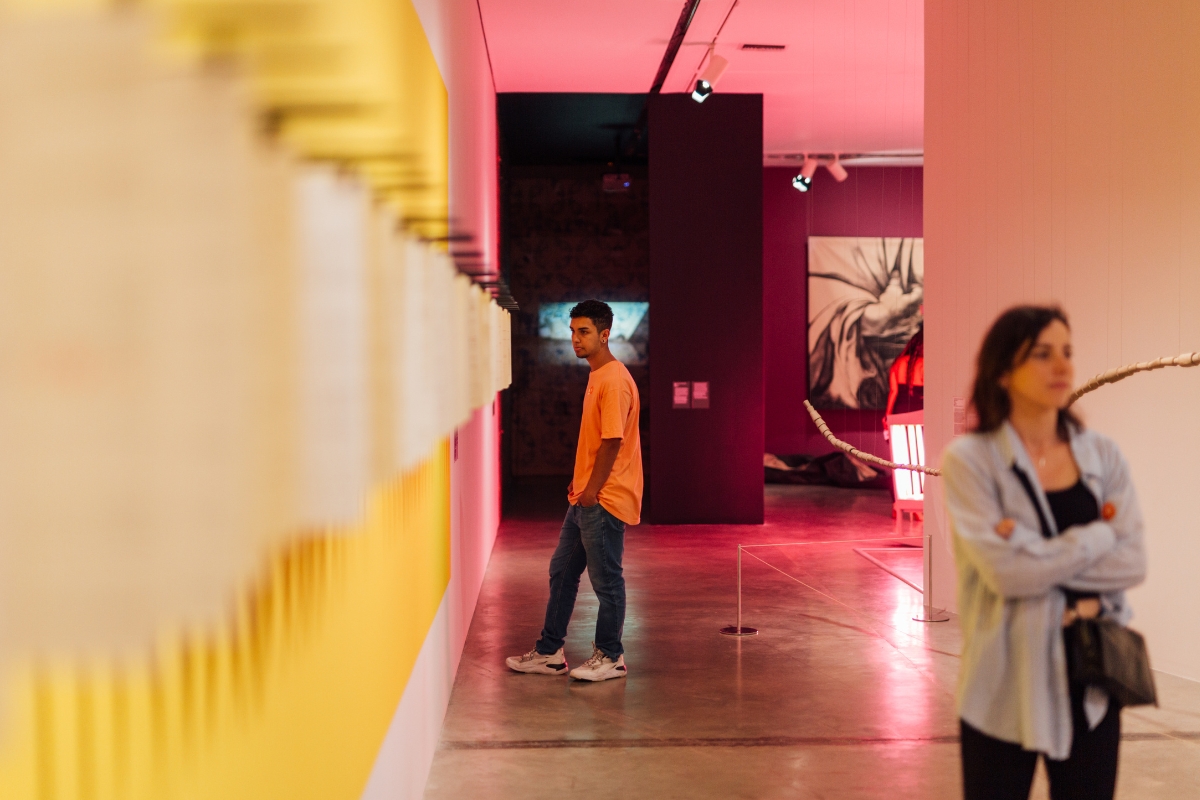
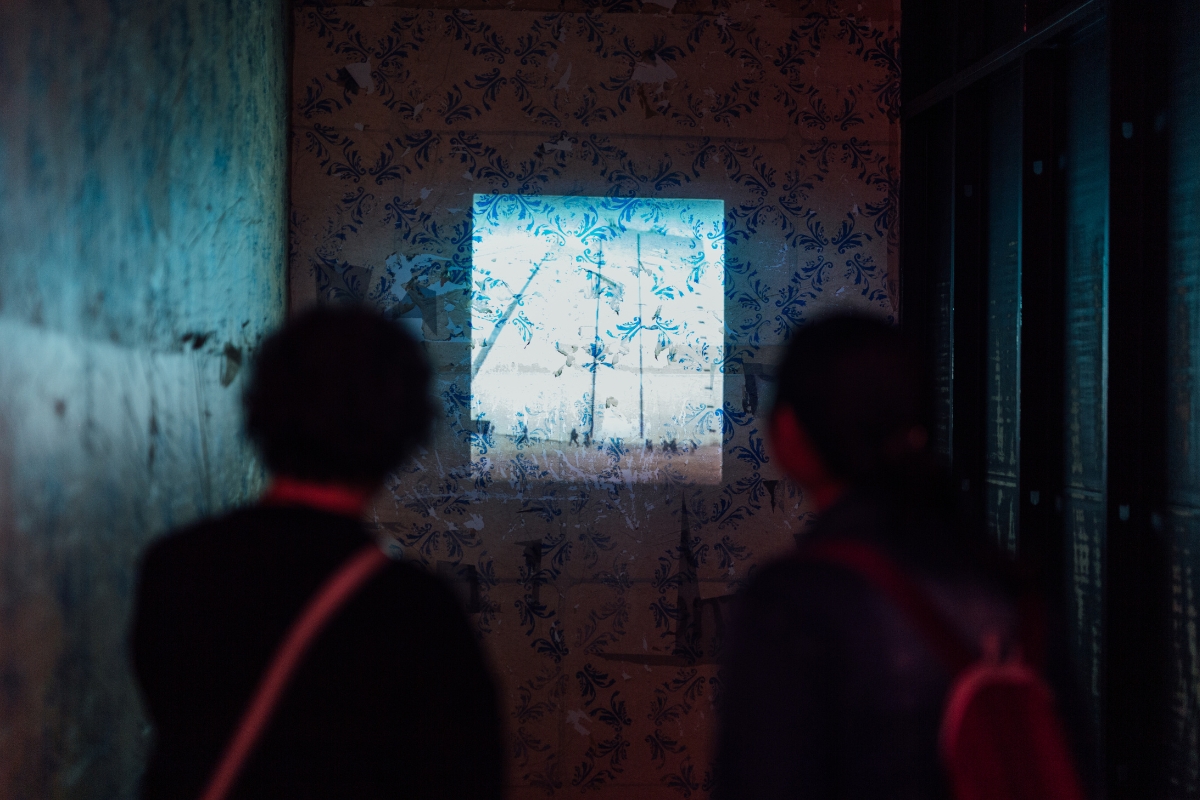
Relive the experience
This exhibition is made possible thanks to
Key ally: Seguros SURA
Supported by: MUV Foundation