

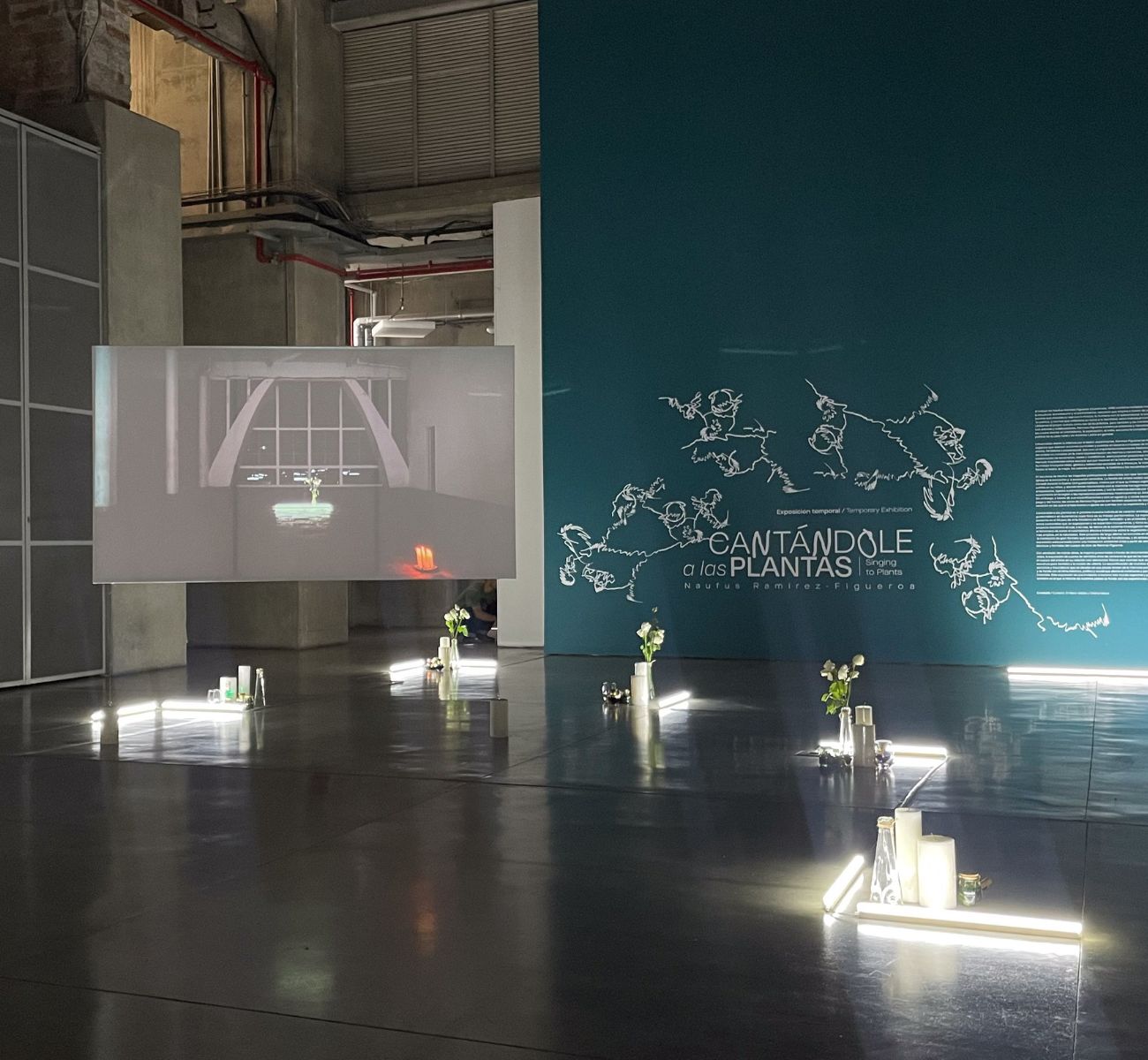
 From 10 de May 2023 al 01 de October del 2023
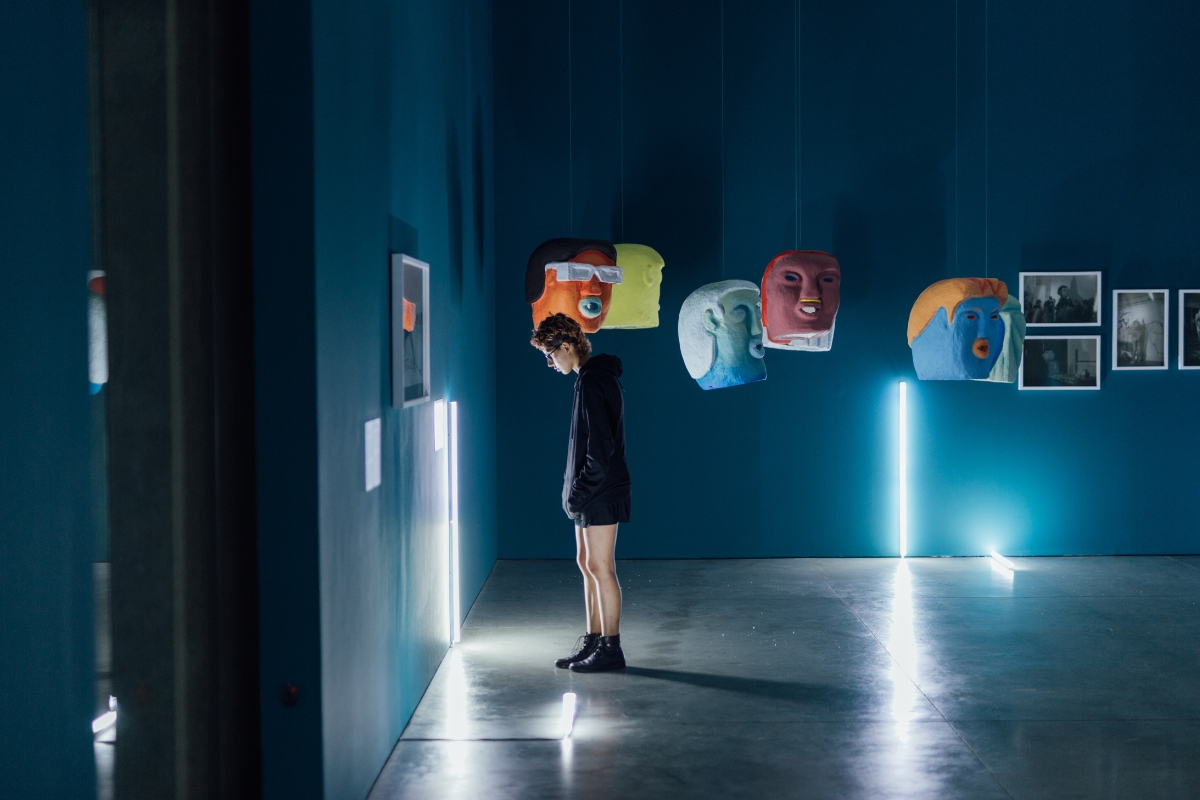
Naufus Ramírez-Figueroa: Singing to the Plants is an anthological exhibition and the Guatemalan artist’s first solo show in South America. Presented in two spaces—MAMBO and MAMM—through two juxtaposed curatorial acts, the retrospective of Naufus’s work includes Singing to the Plants, a piece that connects both exhibitions and stems from the artist’s recent research on the phenomenon of colonialism in vegetation. The exhibition at MAMM spans 22 years of his career, during which the artist’s body has remained a constant presence through performance art and the creation of sculptures and installations. The staging of dreamlike, phantasmagorical, and traumatic worlds revealed in his pieces springs from the artist’s personal and family memories and intertwines with the historical, political, and social climate of Guatemala and Latin America.
Ramírez-Figueroa was born in Guatemala City in 1978, and her family received political asylum in Canada during the Guatemalan civil war. Her artistic work exhumes themes related to her childhood exile; the transgenerational memory of her ancestors—linked to banana plantations; the violence perpetrated by economic powers in the region; and the persistent repression in Latin America. Through symbolic evocation and excavation, she incorporates politically silenced tragedies into her work. Her art encompasses ideas, gestures, and references drawn from literature, art history, folklore, theater, magic, ancestral knowledge, botany, and childhood memories.
The fictionalized reality, inundated with historical data, dreamlike symbols, and the macabre, is presented from the logic of the unconscious in Ramírez-Figueroa’s performances. His work, linked to scenography and silent actions filled with poetic gestures and seemingly harmless, childlike acts, transcends its ritualistic and evocative character, giving way to scenes that conceal subtle violence, uprooting, torture, death, and cultural erasure. In works such as Making Other People Clean (2001), Somodizing Diego Rivera (2001), The Stained Queen (2010), and Mimesis of Mimesis (2016), among others, the artist’s vulnerable body engages in various dialogues with familiar, political, literary, and art-historical figures. In actions like Mariachi Histrionics (2007), Naufus positions his own body as a collective space for narratives and as a container of memories, prejudices, and stereotypes of gender, machismo, and masculinity.
The exhibition, presented as a retrospective, also includes works that explore rituals of mourning and healing, such as *The Original Banana Republic* (2002), *Banana* (2006), *For You the Banana Ripens to the Weight of Your Sweet Love* (2008/2017), *Rainbow* (2011), *Touch of a Feather* (2013), and *Life in Her Mouth, Death Cradles Her Arm* (2016). These works stem from grief, genocide, and massacres that occurred in Guatemala and other countries across the continent, including Colombia. These pieces begin to find a place in Ramírez-Figueroa’s work, uniting his own family history with scourges perpetuated and silenced by economic and state powers. In Naufus’s work, familial and social ghosts are present; creative spaces are constructed for them, in which the artist’s body engages with other bodies. These are theatrical environments and choreographies that blend the emotional imprints of the collective with the harshness of social power. Among these works are Fino Fantasma (2016), Huellas del sueño (2017), Después de limpieza los bosques interiores (2019), and Lugar de consuelo (2020).
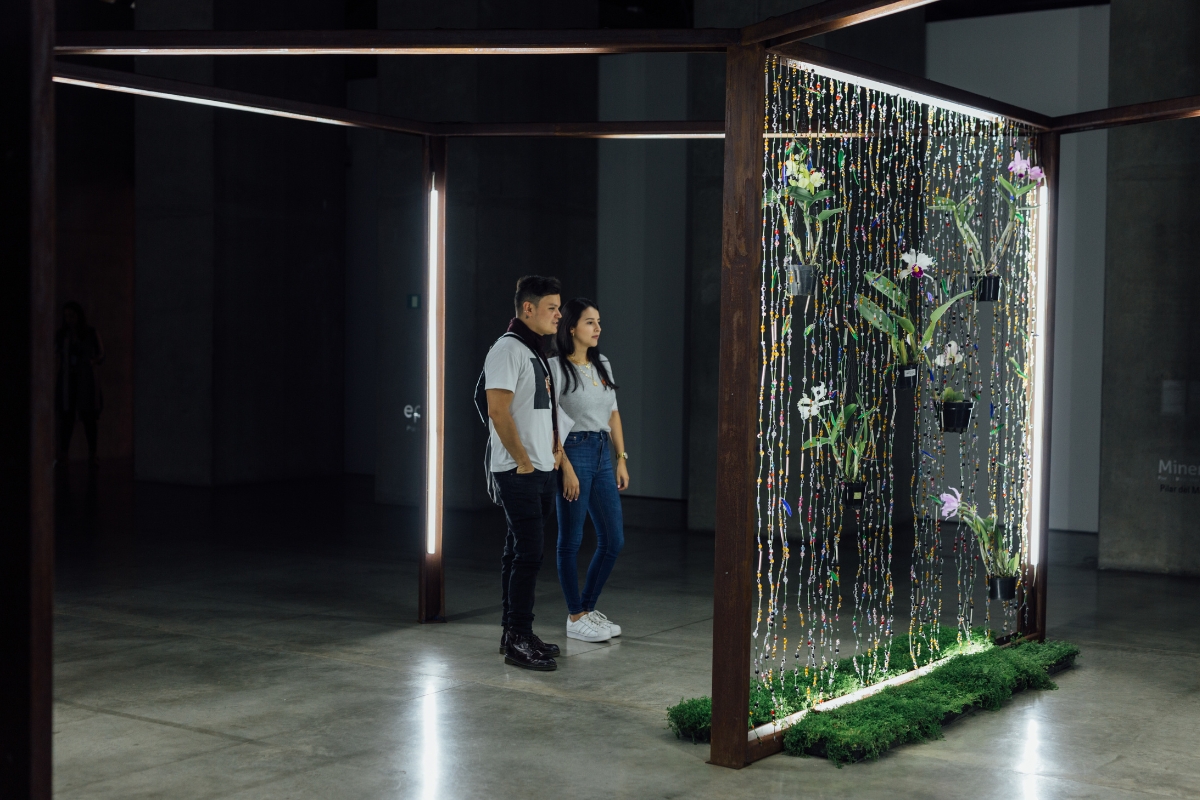
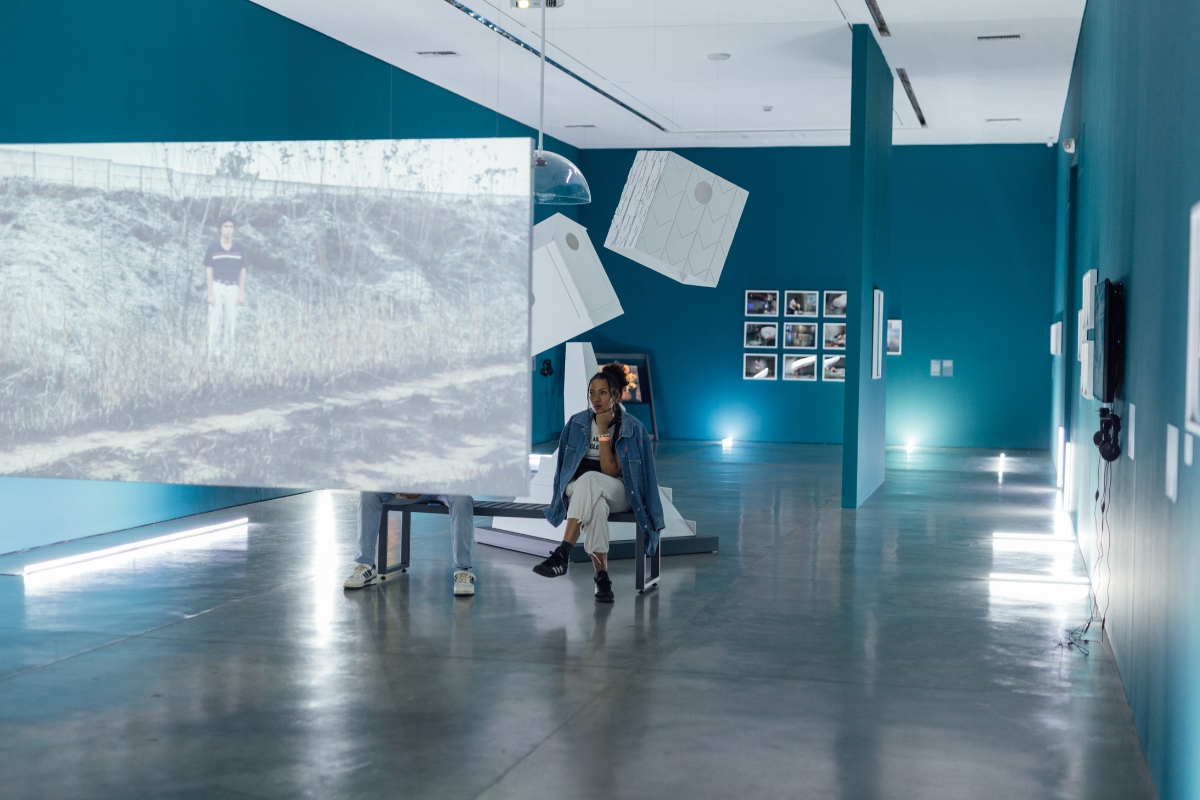
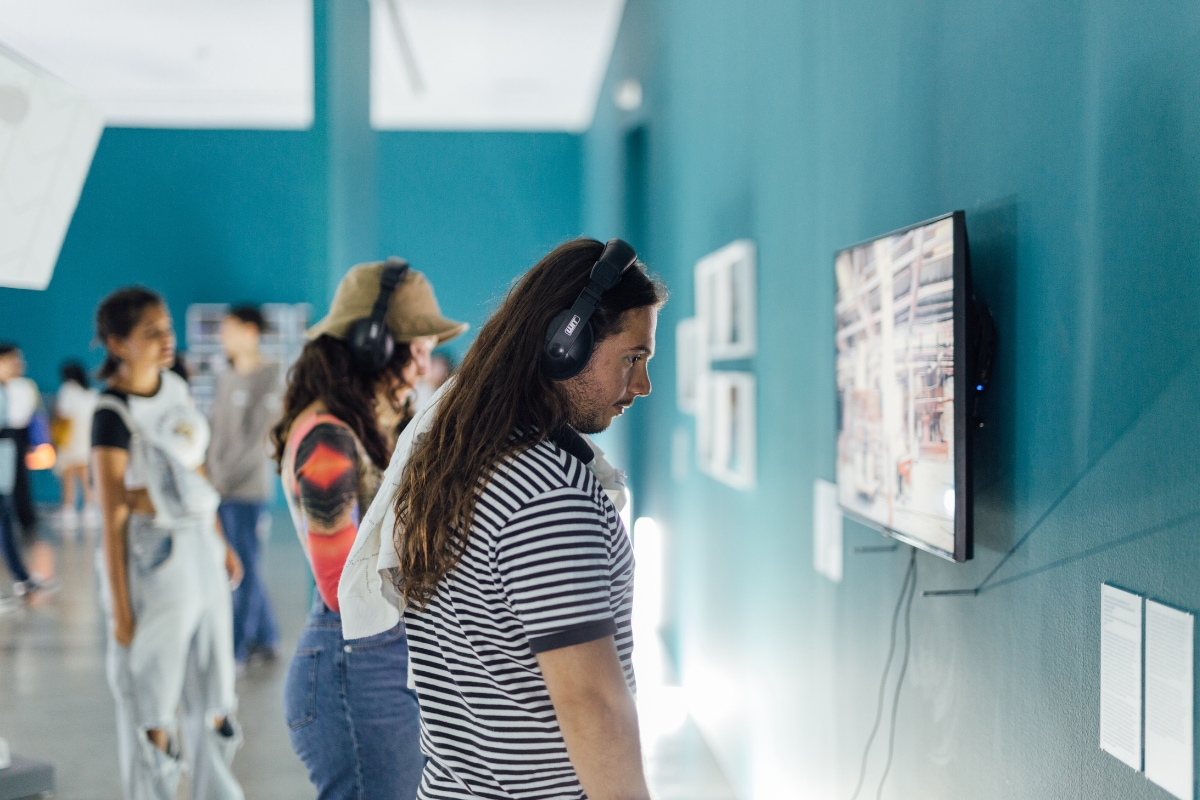
Naufus Ramírez-Figueroa: Cantándole a las plantas (Singing to the Plants) includes 30 works presented in the galleries through photographic and audiovisual records of his performances, activations, video installations, and the unveiling of a previously unseen project in opera format. The exhibition has a strong political component masked by the artist’s personal and familial subjectivity. The selected works allow us to examine the silenced traumas and anxieties of Latin America, while also delving into the performative, poetic, and subtly disturbing practice of one of Central America’s most important mid-career artists.
As part of this exhibition, we will be screening the video performance Naufus Ramírez-Figueroa, Place of Consolation (2020) at the MAMM Theater every Sunday at 12 pm. Admission is with the same ticket price as the Museum’s exhibition halls.
Image: Naufus Ramírez – Figueroa, Linneaus in Tenebris, 2017
Relive the experience
This exhibition is made possible thanks to
Key Partner: Seguros SURA
In collaboration with: Museo de Arte Moderno de Bogotá
Supported by: MUV Foundation